




babymore87
MyBoerse.bz Pro Member
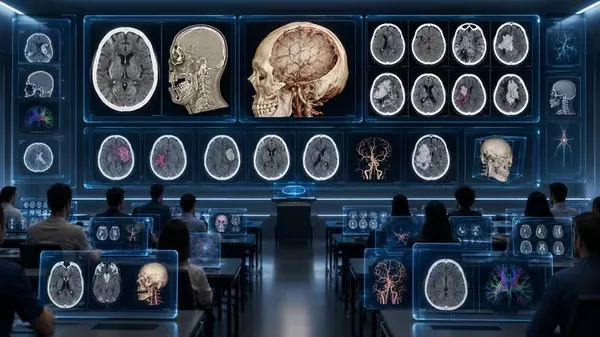
Clinical Head CT Neuroanatomy & Disorders
Published 5/2026
MP4 | Video: h264, 1920x1080 | Audio: AAC, 44.1 KHz, 2 Ch
Language: English | Duration: 3h 26m | Size: 4 GB
Master Head CT Interpretation: Learn Neuroanatomy, Stroke, Hemorrhage, Trauma, and Brain Disorders
What you'll learn
Identify normal neuroanatomy on CT scans of the head with confidence.
Systematically interpret head CT scans using a practical clinical approach.
Recognize common intracranial pathologies, including hemorrhage, stroke, hydrocephalus, and brain tumors.
Differentiate normal findings from abnormal CT appearances in emergency and routine cases.
Understand CT features of traumatic brain injuries and neurosurgical emergencies.
Develop skills to create accurate and clinically relevant CT head reports.
Requirements
Basic knowledge of human anatomy is helpful but not required.
No prior CT interpretation experience is necessary.
A willingness to learn neuroimaging and clinical radiological assessment.
Suitable for beginners as well as healthcare professionals seeking to improve CT interpretation skills.
Description
The human brain is one of the most complex structures in the known universe, and understanding it is essential for anyone working in medicine, radiology, emergency care, or neuroscience. Computed Tomography (CT) of the head is one of the most widely used imaging tools in clinical practice because it is fast, widely available, and highly effective in detecting life-threatening brain conditions. However, interpreting a head CT requires more than just recognizing images-it requires a strong foundation in neuroanatomy, awareness of common and critical brain disorders, and the ability to correlate imaging findings with clinical presentation.
This course,"Clinical Head CT: Neuroanatomy & Disorders," is designed to bridge the gap between basic anatomy knowledge and real-world clinical interpretation of brain CT scans. Whether you are a medical student, radiology trainee, emergency physician, nurse practitioner, or healthcare professional looking to strengthen your diagnostic skills, this course will guide you step-by-step from foundational concepts to practical interpretation of pathological conditions.
What This Course Covers
This course begins with thefundamentals of head CT imaging, including how CT scans work, what different densities represent, and how to systematically approach a brain scan. You will learn how to identify normal anatomical structures, understand variations in imaging planes, and recognize key radiological signs that indicate pathology.
A strong emphasis is placed onbasic neuroanatomy, because accurate interpretation of CT scans depends heavily on knowing what "normal" looks like. You will explore the cerebral hemispheres, ventricles, brainstem, cerebellum, cranial nerves (in clinical correlation), skull structures, and vascular territories. Each structure is explained in a simplified, clinically relevant manner to ensure easy understanding, even for beginners.
Building a Strong Neuroanatomical Foundation
Neuroanatomy is often considered one of the most challenging subjects in medical education due to its complexity and spatial orientation. This course simplifies neuroanatomy by focusing on itsclinical and radiological relevance rather than purely theoretical memorization.
You will learn
- The structure and function of thecerebral lobes (frontal, parietal, temporal, occipital)
- The anatomy of thebasal ganglia and internal capsule
- Ventricular system and cerebrospinal fluid (CSF) pathways
- Brainstem organization (midbrain, pons, medulla)
- Cerebellar anatomy and its role in coordination
- Major blood supply regions of the brain (ACA, MCA, PCA territories)
- Skull bones and intracranial compartments
Each topic is reinforced with CT scan correlation, allowing you to visualize anatomical structures directly on imaging rather than relying only on textbook diagrams.
Understanding Normal Head CT
Before identifying disease, it is essential to understand normal imaging patterns. This course teaches you how to systematically read a head CT using a structured approach
- Identifying correct CT orientation (axial, coronal, sagittal views)
- Recognizing normal gray matter vs white matter differentiation
- Evaluating ventricles for size and symmetry
- Assessing midline structures for shift or deviation
- Checking cisterns and sulci for abnormalities
- Understanding skull integrity and bone windows
You will also learn how to avoid common pitfalls and misinterpretations that often lead to diagnostic errors in clinical practice.
Clinical Disorders in Head CT
A major focus of this course is the identification and understanding ofcommon and life-threatening brain disorders visible on CT scans. Each pathology is explained with clinical relevance, imaging characteristics, and key diagnostic signs.
1. Stroke and Cerebrovascular Disease
- Ischemic stroke: early and late CT findings
- Hemorrhagic stroke: intracerebral and subarachnoid hemorrhage
- MCA infarction and territorial patterns
- Brain edema and mass effect
- Hyperdense vessel sign
2. Traumatic Brain Injury
- Epidural hematoma (lens-shaped appearance)
- Subdural hematoma (crescent-shaped appearance)
- Subarachnoid hemorrhage
- Skull fractures and associated complications
- Diffuse axonal injury (overview)
3. Brain Tumors and Mass Lesions
- Primary brain tumors (gliomas, meningiomas)
- Metastatic lesions
- Mass effect and midline shift
- Ring-enhancing lesions and differential diagnosis
4. Hydrocephalus and CSF Disorders
- Communicating vs non-communicating hydrocephalus
- Ventricular enlargement patterns
- Obstructive causes and imaging signs
5. Infections and Inflammatory Conditions
- Brain abscess imaging features
- Encephalitis (especially temporal lobe involvement)
- Meningitis-related complications
- Tuberculoma and granulomatous disease
6. Congenital and Developmental Abnormalities
- Chiari malformations
- Dandy-Walker syndrome
- Agenesis of corpus callosum
- Structural brain malformations
Each condition is presented in a clinically oriented way so that learners can connect symptoms with imaging findings.
Clinical Approach and Diagnostic Strategy
One of the most valuable aspects of this course is the development of asystematic CT interpretation strategy. Instead of randomly looking at scans, you will learn a step-by-step method that ensures nothing is missed.
This includes
- Checking patient clinical history first
- Following a structured scan review pathway
- Identifying urgent "red flag" findings
- Differentiating acute vs chronic changes
- Correlating radiological findings with neurological symptoms
By the end of the course, you will be able to confidently approach any head CT scan in an emergency or clinical setting.
Why This Course Is Important
Head CT interpretation is a critical skill in modern medicine. In emergency departments, timely and accurate reading of CT scans can save lives-especially in cases of stroke, trauma, and intracranial hemorrhage. Unfortunately, many learners struggle because they lack a clear connection between anatomy, imaging, and pathology.
This course is designed to solve that problem by integrating
- Simplified neuroanatomy
- Real CT scan examples
- Clinical correlation
- Systematic diagnostic methods
Instead of memorizing isolated facts, you will learn how tothink like a clinician and interpret like a radiologist.
Who this course is for
Medical students interested in radiology, neurology, or neurosurgery.
Interns, residents, and postgraduate trainees in clinical specialties.
General practitioners and emergency physicians who interpret head CT scans.
Radiology residents, radiographers, and imaging professionals.
Neurology and neurosurgery trainees seeking a structured approach to CT head interpretation.
Healthcare professionals who want to strengthen their neuroimaging skills.
Recommend Download Link Hight Speed | Please Say Thanks Keep Topic Live
No Password - Links are Interchangeable
