




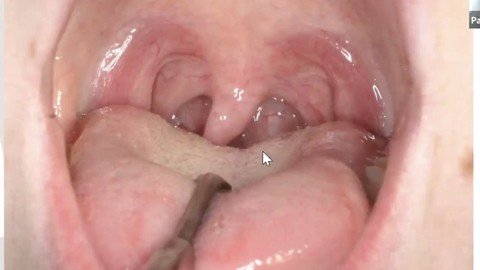
Free Download Clinical Examination And Photography In Orthodontics
Published 7/2024
MP4 | Video: h264, 1280x720 | Audio: AAC, 44.1 KHz
Language: English | Size: 600.06 MB | Duration: 1h 22m
Learn skills on extra oral and intraoral clinical examination and photography in orthodontics
What you'll learn
How to do clinical assessment of orthodontic patient
Extra oral examination
Intraoral examination
Clinical photography in orthodontics
Requirements
Dental students and dentists
Description
Clinical ExaminationThe clinical dental examination is an essential part of dentistry and guides every treatment plan. A thorough orthodontic examination begins with a systematic extra‐ and intraoral examination.Extraoral ExaminationThe findings of a thorough extraoral examination greatly aids in treatment planning. The extraoral examination includes a general assessment of the patient's awareness, posture, temporomandibular joint, head, neck, skeletal pattern and soft tissues. It is important to observe the patient at rest and in function, without their awareness. This approach increases the accuracy of the assessment. The extraoral examination commences in the waiting room or consultation room by observing
 ostureawarenesscompliancelevel of comprehension and communication.Facial Type and Skeletal PatternA valuable aspect of the extraoral examination is identifying the facial type (Figure 3.1) and skeletal pattern (Figure 3.2). The patient must be in a neutral position, sitting upright or standing, looking at a distant object straight ahead. Ensure that the Frankfort plane is horizontal and parallel to the floor by imagining a line from the upper border of the external auditory meatus to the lower border of the orbit (McDonald, 1998). It is important to ensure that the teeth are in centric relation and biting in maximum interdigitation, as these factors affect the accuracy of the examination. Some patients tend to posture the mandible forward and a false diagnosis can be recorded. The frontal view allows an evaluation of the facial type. The sagittal view allows an assessment of the skeletal pattern. On the lateral profile of the patient imagine two lines:From the bridge of the nose to the base of the upper lip.Extending from the base of the upper lip to the base of the chin.These lines are an indication of the facial profile and a straight line is considered to be the norm (class I). In a skeletal class II, a convex profile is evident, owing to prominence of the maxilla. In a skeletal class III, concavity in the profile is evident, owing to prominence of the mandible.Facial appearance is evaluated in three planes of space: anteroposterior, vertical and transverse.AnteroposteriorThis is the assessment of the relative position of the maxilla and the mandible. It is classified as:Class I skeletal pattern: the mandible is about 2-3 mm posterior to the maxilla. The patient presents with a straight profile, known as a mesognathic profile. The harmony between the maxilla and the mandible creates this straight profile.Class II skeletal pattern: the mandible is too far posterior in relation to the maxilla. The patient presents with a convex profile, known as a retrognathic profile. This discrepancy may be due to a protrusive maxilla or a retrusive mandiblerotrusive maxilla: the mandible is in a normal position but the maxilla is positioned too far forward.Retrusive mandible: the maxilla is in the normal position but the mandible is positioned too far posterior in relation to the maxilla.Class III skeletal pattern: the mandible is positioned anterior to the maxilla. The patient presents with a concave profile, known as a prognathic profile due to the overgrowth of the mandible.The dental base supports the alveolar process without the presence of a distinct barrier. Protrusion of both maxillary and mandibular alveolar processes is known as a bimaxillary protrusion (Figure 3.3). This protrusion of the alveolar process in the upper and lower arches can occur concomitantly with class I, class II or class III skeletal bases. Clinically, this is presented by protrusive and everted lips that are separated at rest; hence, incompetent lips. If both the upper and lower alveolar processes are retruded regardless of the skeletal base characteristics, this is termed bimaxillary retrusion.VerticalAssessment of the lower facial height (Figure 3.4) provides a good indication of any vertical discrepancies:Upper third: the forehead.Middle third: supraorbital ridge to the base of the nose.Lower third: base of the nose to the base of the chin. The lower portion is further classified as:The lower one‐third is from the base of the nose to the base of the upper lip.The lower two‐thirds consists of the lower lip and chin.The height of the middle third should equal to height of the lower third. An increase lower facial height is commonly seen in patients with a class III skeletal base owing to the prominence of the chin. A decreased lower facial height is seen in patients with class II skeletal base with a retrusive mandible.4. TransverseA mild asymmetry can be considered to be normal. However, any asymmetry must be noted clearly as part of the extra oral examination. This may be due to discrepancies in the transverse sizes of the maxilla and/or the mandible.Assessment of Lymph Nodes and the Temporomandibular JointThe head and neck regions are examined for any alerts that may indicate an underlying condition, which may require specific attention prior to starting the treatment. The head and neck must be palpated to ensure that the lymph nodes are of normal size and no abnormalities can be detected. The temporomandibular joint and the surrounding muscles must be checked for anomalies such as tenderness, crepitus (clicking sound that occurs due to friction between cartilage and bone) and deviations that can affect the orthodontist's therapeutic approach and appliance design. If the patient presents with one or more signs of irregularities, a referral to an oral maxillofacial surgeon may be indicated for further investigations.Soft Tissue AnalysisThis part of the examination is most effectively and accurately achieved by assessing the patient in function and at rest, without their awareness. It is important to note the following as part of the soft tissue analysis:Lip morphology: fullness, tone and form of the lips.Lip competency and anterior oral seal: determine how well the upper and lower lips can meet without muscular effort. Lip incompetency may be due to a bimaxillary protrusion, short resting lip length, increased lower anterior face height or protruded upper incisors due to a severe class II. If the lips are incompetent, a normal anterior oral seal will not be achieved.Smile framework: the dental midline will set a starting point for achieving an aesthetically pleasing smile. Ideally, the dental midline needs to be parallel and in the same direction as the facial midline. The degree of incisor display and smile symmetry are important aesthetic parameters.The lip line: the position of the upper lip is pivotal to the degree of upper incisor display. This exposure of the height of the incisors is called the lip line. Reduced incisor display may be an indication of aging. The lip line must reach the gingival margin, displaying upper incisal edges and the interdental gingiva. A 'gummy smile' is the term given to a higher than average lip line, which exposes excessive gingiva.The golden proportion: the golden proportion of the width of the upper teeth displayed on a frontal view upon smiling is a recurrent 62% proportion - the width of the upper lateral incisor displayed should be 62% of the upper central incisor, the apparent width of the upper canine must be 62% of the upper lateral incisor and the first upper premolar apparent width should be 62% of the upper canine.Black triangles: these are the gingival embrasures contour around the interproximal contacts in an aesthetically pleasing smile. Short interdental papillae fail to contour the interproximal contacts, so black triangles develop. Black triangles may occur as a result of periodontal disease and are commonly seen after correction of severely crowded or rotated teeth.Buccal corridors: the smile width can be assessed by checking the degree of the first upper premolar exposure. The buccal corridor is the space formed between the inner buccal surfaces and the maxillary molars upon smiling. An aesthetically pleasing smile has reduced buccal corridors (Moore, 2005). The anteroposterior position of the maxilla and the inclination of the upper molars influence the width of the buccal corridor. Increased arch width results in reduced buccal corridor. Palatally inclined molars results in increased buccal corridor width.Smile arc: There are three types of smile arcs:Consonant: the border of the lower lip follows a curvature along the upper incisal edges. This is considered an ideal smile arc.Flat: the superior boarder of the lower lip is parallel to the upper incisal edges.Non‐consonant: the top border of the lower lip forms a reverse curve with the upper incisal edges. Tongue: check for tongue thrust during speech or swallowing. Tongue thrust is protrusion of the tongue between the incisors due to musculature imbalance.Intraoral ExaminationThe purpose of this part of the examination is:to address chief compliantto determine clinical signs of malocclusion or dentoalveolar discrepanciesto check periodontal healthto assess the patient's oral health and hygiene status.A systematic approach is needed to prevent omission. The intraoral examination commences with an assessment of the soft and hard tissue for any lesions, congenital abnormalities and evaluation of the occlusal relationships. Orthodontists assess four areas to make a diagnosis of the malocclusion:Upper jawUpper dentoalveolarLower dentoalveolarLower jawThe anteroposterior, vertical and transverse relationships of the alveolar bone, dentition and the underlying basal bone forms the final diagnosis.Soft TissuesIn a logical approach, all the soft tissues in the mouth must be assessed for any abnormalities. Using a good source of light, dental mirror and a probe, examine:the oral mucosa and vestibulesthe glandsthe fraenumthe health status of the gingivathe gingival marginsthe soft and hard palatethe tongue.A periodontal chart is also recommended for patients presenting with signs of poor periodontal health. In cases of any form of periodontal disease, orthodontic treatment is contraindicated until the disease is under control, regardless of the age of the patient.Hard TissuesTeeth must be charted carefully and all findings must be recorded thoroughly. The clinical examination must have a systematic routine to ensure that nothing is missed. It is recommended to begin the examination from one quadrant and move across to the next, assessing and recording:the presence of pathologydetected carieserupted teethenamel morphologymissing teeth and reason for tooth loosprevious dental treatmentprevious or current trauma.It is extremely important to note the pattern of eruption to assess the dental age. Delayed eruptions, particularly asymmetrical delayed eruptions, may indicate an underlying problem such as a supernumerary teeth, ectopic eruption or impaction (see Chapter 6). The area must be palpated for permanent successors both palatally, lingually and labially. Radiographs are necessary if the permanent successor is not palpable. However, further data collection may be required in patients with a history of trauma, as the tooth may be dilacerated (bent roots), resulting in a delayed eruption.OcclusionOcclusion is the relationship between the upper and lower jaws. Various terminologies are given to the occlusion depending on how the jaws meet. When the teeth meet during a function, such as speech or eating, the occlusion is termed 'dynamic occlusion'. The centric relation is critical during an intraoral examination. The centric relation is the most posterior position of the mandible. In centric relation, the mandibular condyle is in the most superior and posterior position in the glenoid fossa. The centric relation is considered the orthodontic problem. The centric occlusion refers to the habitual bite or bite of comfort. Centric occlusion is also known as intercuspation position, because of the maximum interdigitation as the cusps of both arches lock in completely.Dentoalveolar CompensationsWhen noting malocclusion and skeletal patterns, attention must be paid to dentoalveolar compensations. The dentoalveolar compensatory mechanism is when discrepancies are camouflaged or disguised due to dentoalveolar modifications; for example, protrusive upper anterior incisors camouflaging the severity of a skeletal class III malocclusion.Midline ShiftCheck the path of mandibular closure to assess the midline when the patient bites into maximum interdigitation. Any displacement or deviation upon closure is best examined from behind, looking directly down from above the patient. The patient must therefore be in a supine position.Occlusal CurvatureAnother critical aspect to be noted is the curvature of the occlusion. An ideal occlusion contains a flat occlusal plane. The various types of occlusal curvature are:the curve of Spee: a curvature in the mandible caused by extrusion of the anterior teeth and intrusion of the molar teeth. It is typically seen in deep bites (Figure 3.5a).the curve of Wilson: a curvature in the occlusion resulting from inward tipping of the molars (Figure 3.5b).Occlusal RelationshipsThe canine and molar occlusal relationships are best assessed using Angle's classification and the incisor relationships examined on the basis of the British standards incisor classification (Table 3.2). In an ideal occlusion, all lower teeth are about half a unit anterior to the upper teeth (Figure 3.6). This is because of the size differences between the upper and lower incisors; the lower anterior teeth are narrower than the upper anterior teeth.
Overview
Lecture 1 Clinical Examination
Lecture 2 Photograpgy in orthodontics
Lecture 3 Learn Extraoral Photography
Lecture 4 Learn Introral Photography in Orthodontics
Lecture 5 Evalutation of Diagnostic Records
Lecture 6 Case Presentation in Orthodontics
Dental students,General practitioners,Orthodontist,Post graduate students
Homepage
Recommend Download Link Hight Speed | Please Say Thanks Keep Topic Live
No Password - Links are Interchangeable
