• Regeln für den Video-Bereich:

    In den Börsenbereich gehören nur Angebote die bereits den Allgemeinen Regeln entsprechen.

    Einteilung

    - Folgende Formate gehören in die angegeben Bereiche:
    - Filme: Encodierte Filme von BluRay, DVD, R5, TV, Screener sowie Telesyncs im Format DivX, XviD und x264.
    - DVD: Filme im Format DVD5, DVD9 und HD2DVD.
    - HD: Encodierte Filme mit der Auflösung 720p oder darüber von BluRay, DVD, R5, TV, Screener sowie Telesyncs im Format x264.
    - 3D: Encodierte Filme von BluRay, die in einem 3D Format vorliegen. Dies gilt auch für Dokus, Animation usw.
    - Serien: Cartoon/Zeichentrick, Anime, Tutorials, Dokumentationen, Konzerte/Musik, Sonstiges sind demnach in die entsprechenden Bereiche einzuordnen, auch wenn sie beispielsweise im High Definition-Format oder als DVD5/DVD9/HD2DVD vorliegen. Ausnahme 3D.
    - Bereich Englisch: Englische Releases gehören immer in diesen Bereich.
    - Bereich Talk: Der Bereich, in dem über die Releases diskutiert werden kann, darf, soll und erwünscht ist.


    Angebot/Beitrag erstellen

    - Ein Beitrag darf erst dann erstellt werden, wenn der Upload bei mindestens einem OCH komplett ist. Platzhalter sind untersagt.
    - Bei einem Scenerelease hat der Threadtitel ausschließlich aus dem originalen, unveränderten Releasenamen zu bestehen. Es dürfen keine Veränderungen wie z.B. Sterne, kleine Buchstaben o.ä. vorgenommen werden. Ausnahme Serienbörse:
    - Bei einem Sammelthread für eine Staffel entfällt aus dem Releasename natürlich der Name der Folge. Beispiel: Die Simpsons S21 German DVDRip XviD - ITG
    - Dementsprechend sind also u.a. verboten: Erweiterungen wie "Tipp", "empfehlenswert", "only", "reup", usw. / jegliche andere Zusatzinformation oder Ergänzung, welche nicht in obiger Beschreibung zu finden ist.

    Aufbau des Angebots und Threadtitel

    Der Titel nach folgendem Muster erstellt zu werden. <Name> [3D] [Staffel] [German] <Jahr> <Tonspur> [DL] [Auflösung] <Quelle> <Codec> - <Group>
    Beispiel: The Dark Knight German 2008 AC3 DVDRip XviD - iND
    Beispiel: The Dark Knight 2008 DTS DL BDRip x264 - iND
    Beispiel: The Dark Knight 2008 AC3 DL BDRip XviD - iND
    Beispiel: The Dark Knight German 2008 AC3 720p BluRay x264 iND
    Beispiel: The Dark Knight 2008 DTS DL 1080p BluRay x264 iND
    Beispiel: Die Simpsons S01 German AC3 DVDRip XviD iND
    Beispiel: Die Simpsons S20 German AC3 720p BluRay x264 iND
    Beispiel: Sword Art Online II Ger Sub 2014 AAC 1080p WEBRip x264 - peppermint
    Entsprechend sind also u.a. verboten: Sonderzeichen wie Klammern, Sterne, Ausrufezeichen, Unterstriche, Anführungszeichen / Erweiterungen wie "Tipp", "empfehlenswert", "only", "reup", usw. / jegliche andere Zusatzinformation oder Ergänzung, welche nicht in obiger Beschreibung zu finden ist
    Ausnahmen hiervon können in den Bereichen geregelt sein.

    Die Beiträge sollen wie folgt aufgebaut werden:
    Überschrift entspricht dem Threadtitel
    Cover
    kurze Inhaltsbeschreibung
    Format, Größe, Dauer sind gut lesbar für Downloader außerhalb des Spoilers zu vermerken
    Nfo sind immer Anzugeben und selbige immer im Spoiler in Textform.
    Sind keine Nfo vorhanden z.B. Eigenpublikationen, sind im Spoiler folgende Dateiinformationen zusätzlich anzugeben :
    Quelle
    Video (Auflösung und Bitrate)
    Ton (Sprache, Format und Bitrate der einzelnen Spuren)
    Untertitel (sofern vorhanden)
    Hosterangabe in Textform außerhalb eines Spoiler mit allen enthaltenen Hostern.
    Bei SD kann auf diese zusätzlichen Dateiinformationen verzichtet werden.

    Alle benötigten Passwörter sind, sofern vorhanden, in Textform im Angebot anzugeben.
    Spoiler im Spoiler mit Kommentaren :"Schon Bedankt?" sind unerwünscht.


    Releases

    - Sind Retail-Release verfügbar, sind alle anderen Variationen untersagt. Ausnahmen: Alle deutschen Retail-Release sind CUT, in diesem Fall sind dubbed UNCUT-Release zulässig.
    - Im Serien-Bereich gilt speziell: Wenn ein Retail vor Abschluss einer laufenden Staffel erscheint, darf diese Staffel noch zu Ende gebracht werden.62
    - Gleiche Releases sind unbedingt zusammenzufassen. Das bedeutet, es ist zwingend erforderlich, vor dem Erstellen eines Themas per Suchfunktion zu überprüfen, ob bereits ein Beitrag mit demselben Release besteht. Ist dies der Fall, ist der bereits vorhandene Beitrag zu verwenden.
    - P2P und Scene Releases dürfen nicht verändert oder gar unter einem iND Tag eingestellt werden.


    Support, Diskussionen und Suche

    - Supportanfragen sind entweder per PN oder im Bereich Talk zu stellen.
    - Diskussionen und Bewertungen sind im Talk Bereich zu führen. Fragen an die Uploader haben ausschließlich via PN zu erfolgen, und sind in den Angeboten untersagt.
    - Anfragen zu Upload-Wünschen sind nur im Bereich Suche Video erlaubt. Antworten dürfen nur auf Angebote von MyBoerse.bz verlinkt werden.


    Verbote

    - Untersagt sind mehrere Formate in einem einzigen Angebotsthread, wie beispielsweise das gleichzeitige Anbieten von DivX/XviD, 720p und 1080p in einem Thread. Pro Format, Release und Auflösung ist ein eigener Thread zu eröffnen.
    - Grundsätzlich ebenso verboten sind Dupes. Uploader haben sich an geeigneter Stelle darüber zu informieren, ob es sich bei einem Release um ein Dupe handelt.
    - Gefakte, nur teilweise lauffähige oder unvollständige Angebote sind untersagt. Dies gilt auch für eigene Publikationen, die augenscheinlich nicht selbst von z.B. einer DVD gerippt wurden. Laufende Serien, bei denen noch nicht alle Folgen verfügbar sind, dürfen erstellt und regelmäßig geupdatet werden.
    - Untersagt sind Angebote, welche nur und ausschließlich in einer anderen Sprache als deutsch oder englisch vorliegen. Ausnahmen sind VORHER mit den Moderatoren zu klären.


    Verstoß gegen die Regeln

    - Angebote oder Beiträge, die gegen die Forenregeln verstoßen, sind über den "Melden"-Button im Beitrag zu melden.
  • Bitte registriere dich zunächst um Beiträge zu verfassen und externe Links aufzurufen.


Build a Computer From Scratch Binary to CPU to Assembly

babymore87

MyBoerse.bz Pro Member
3584f582e09d00b266b4b258f9b4a56d.webp

Build a Computer From Scratch Binary to CPU to Assembly
Published 9/2026
Created by MasterMind Academy
MP4 | Video: h264, 1920x1080 | Audio: AAC, 44.1 KHz, 2 Ch
Level: Beginner | Genre: eLearning | Language: English | Duration: 53 Lectures ( 11h 13m ) | Size: 5.4 GB

Learn binary, logic gates, CPU design, and assembly by building an 8-bit computer from scratch - no experience required.
What you'll learn
⚡ Convert between decimal and binary, and understand two's complement negative numbers
⚡ Perform binary addition and subtraction by hand
⚡ Build logic gates into functional circuits (selectors, adders)
⚡ Design a half-adder and full-adder, then chain them into a multi-bit ALU
⚡ Add subtraction capability to an ALU circuit
⚡ Understand sequential logic: latches and flip-flops for data storage
⚡ Build Random Access Memory (RAM) and Read-Only Memory (ROM) from logic gates
⚡ Connect ALU, RAM, and a bus architecture together
⚡ Design an Instruction Set Architecture (ISA) and a control unit
⚡ Implement conditional branching and a flags register
⚡ Write and execute real machine-code programs, including Fibonacci
⚡ Understand real-world CPUs: ARMv6, hexadecimal, and memory-mapped I/O
⚡ Program an actual microcontroller using the concepts learned
Requirements
❗ No prior electronics or programming experience required
❗ Curiosity about how computers work at the hardware level
❗ A basic microcontroller/dev board if following the final hands-on section
Description
Build a Computer from Logic Gates - From Binary to a Working 8-Bit CPU
Learn how computers work from the ground up by building your own 8-bit CPU using digital logic gates. This hands-oncomputer architecture and digital electronics course takes you frombinary numbers, logic gates, and Boolean logic to building anALU, RAM, ROM, control unit, instruction set architecture (ISA), and a fully functional 8-bit CPU.
If you want to understandhow a CPU actually works, how machine code becomes hardware operations, and how memory, registers, ALU, control logic, and buses work together, this course gives you a complete step-by-step journey fromlogic gates to a working computer.
You don't need advanced knowledge of computer architecture or digital electronics. Start with the fundamentals and progressively build every major componentone logic gate at a time.
What You'll Learn
Binary Numbers & Computer Number Systems
✨ Understand how humans represent numbers using decimal and how computers use binary
✨ Convert between decimal and binary
✨ Perform binary addition and subtraction
✨ Understand negative numbers andtwo's complement
Digital Logic & Logic Gates
✨ Learn the fundamentals of digital logic
✨ Build circuits using basic logic gates
✨ Understand selectors and combinational logic
✨ Buildhalf adders and full adders
✨ Combine adders to create an8-bit Arithmetic Logic Unit (ALU)
✨ Perform both addition and subtraction using your ALU
Sequential Logic & Computer Memory
✨ Understand latches and flip-flops
✨ BuildRAM from logic gates
✨ BuildROM from logic gates
✨ Understand how computer memory stores and retrieves information
✨ Create a bus architecture to connect different parts of the CPU
Build Your Own 8-Bit CPU
✨ Connect the ALU, memory, and bus together
✨ Add a 7-segment display
✨ Add state and sequential behavior
✨ Design your ownInstruction Set Architecture (ISA)
✨ Build an instruction register
✨ Build a program counter
✨ Understand the CPU clock
✨ Create acontrol unit using ROM
✨ Implement branching and CPU flags
Machine Code & CPU Programming
✨ Understand how instructions are represented as machine code
✨ Write programs for your custom CPU
✨ Execute real machine-code programs
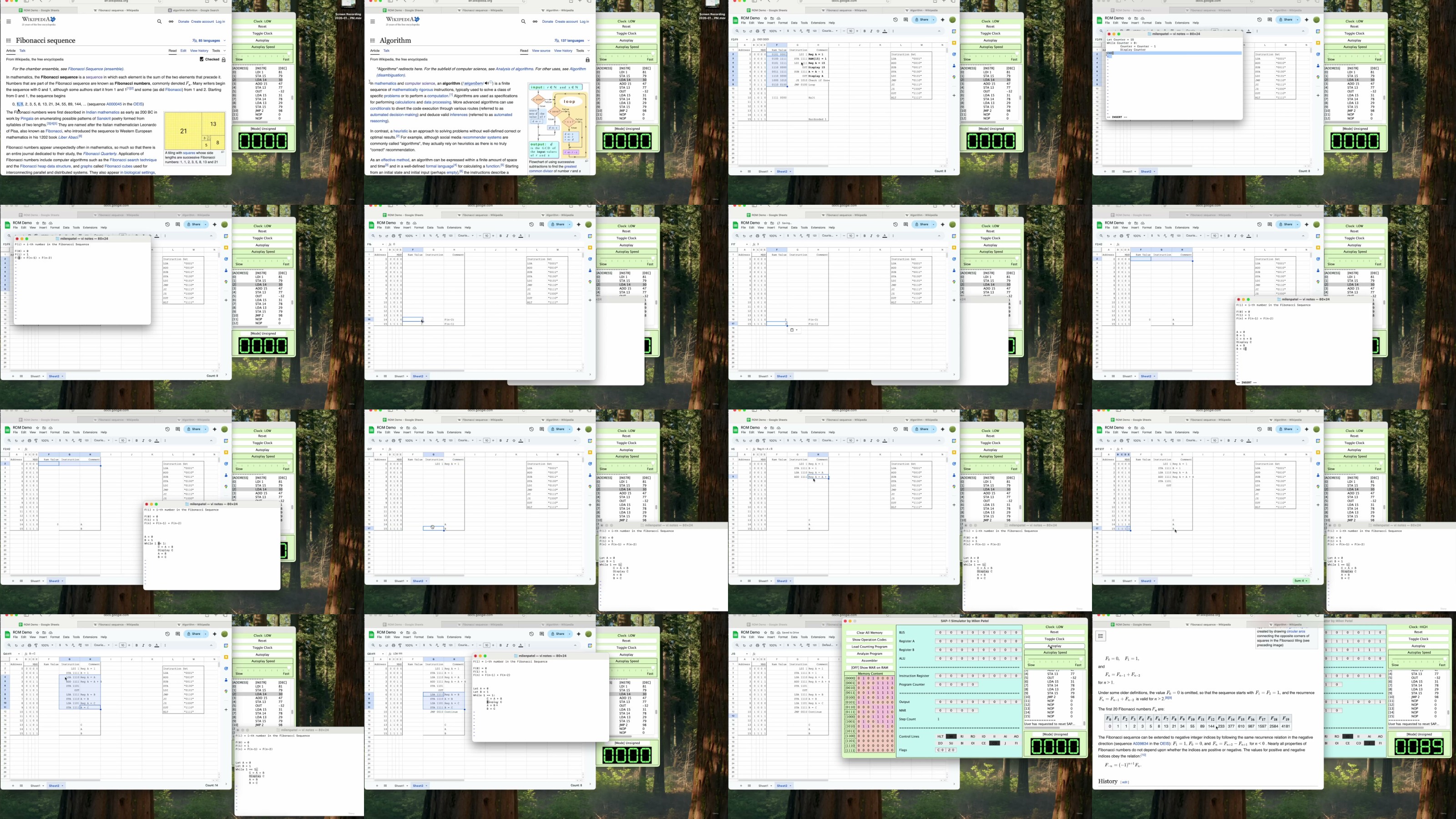
✨ Generate sequences such as theFibonacci sequence
✨ See exactly how software instructions are executed by hardware
From Your CPU to Real-World Computers
✨ Understandhexadecimal numbers
✨ Explorememory-mapped I/O
✨ Learn about the ARM architecture
✨ Explore the original iPhone'sARMv6 processor
✨ Program a real microcontroller
✨ Control physical hardware and turn on a light
By the End of This Course
You'll understand the complete journey frombinary numbers and logic gates to a working CPU.
You'll see howdigital logic becomes an ALU, how sequential logic creates memory, how instructions are decoded, how machine code controls hardware, and how all these components work together inside a computer.
This Course Is Perfect For
✨ Beginners who want to learnhow computers work
✨ Students studyingcomputer architecture
✨ Students learningdigital electronics and digital logic
✨ Computer science students
✨ Electronics enthusiasts
✨ Embedded systems beginners
✨ Programmers who want to understand computer hardware
✨ Anyone interested inCPU design
✨ Anyone who wants to build a computer from the ground up
Start with binary. Build logic gates. Create memory. Design an ALU. Build an 8-bit CPU. Write machine code. Program real hardware.
Learn computer architecture by building a computer yourself - from logic gates to CPU.
Who this course is for
⭐ CS/ECE students wanting to understand computer architecture fundamentals
⭐ Self-taught programmers who want to know "what's really happening" under the hood
⭐ VLSI/embedded/digital-design learners building foundational knowledge
⭐ Anyone preparing for computer architecture interview questions
Homepage
Recommend Download Link Hight Speed | Please Say Thanks Keep Topic Live
No Password - Links are Interchangeable

 

778351768_yxusj-hqf1rb9u4386.jpg

Build a Computer From Scratch: Binary to CPU to Assembly
MP4 | Video: h264, 1920x1080 | Audio: AAC, 44.1 KHz, 2 Ch
Genre: eLearning | Language: English | Duration: 53 Lectures ( 11h 13m ) | Size: 5.4 GB​

Build a Computer from Logic Gates - From Binary to a Working 8-Bit CPU

Learn how computers work from the ground up by building your own 8-bit CPU using digital logic gates. This hands-on computer architecture and digital electronics course takes you from binary numbers, logic gates, and Boolean logic to building an ALU, RAM, ROM, control unit, instruction set architecture (ISA), and a fully functional 8-bit CPU.

If you want to understand how a CPU actually works, how machine code becomes hardware operations, and how memory, registers, ALU, control logic, and buses work together, this course gives you a complete step-by-step journey from logic gates to a working computer.

You don't need advanced knowledge of computer architecture or digital electronics. Start with the fundamentals and progressively build every major component one logic gate at a time.

What You'll Learn

Binary Numbers & Computer Number Systems

Understand how humans represent numbers using decimal and how computers use binary

Convert between decimal and binary

Perform binary addition and subtraction

Understand negative numbers and two's complement

Digital Logic & Logic Gates

Learn the fundamentals of digital logic

Build circuits using basic logic gates

Understand selectors and combinational logic

Build half adders and full adders

Combine adders to create an 8-bit Arithmetic Logic Unit (ALU)

Perform both addition and subtraction using your ALU

Sequential Logic & Computer Memory

Understand latches and flip-flops

Build RAM from logic gates

Build ROM from logic gates

Understand how computer memory stores and retrieves information

Create a bus architecture to connect different parts of the CPU

Build Your Own 8-Bit CPU

Connect the ALU, memory, and bus together

Add a 7-segment display

Add state and sequential behavior

Design your own Instruction Set Architecture (ISA)

Build an instruction register

Build a program counter

Understand the CPU clock

Create a control unit using ROM

Implement branching and CPU flags

Machine Code & CPU Programming

Understand how instructions are represented as machine code

Write programs for your custom CPU

Execute real machine-code programs

Generate sequences such as the Fibonacci sequence

See exactly how software instructions are executed by hardware

From Your CPU to Real-World Computers

Understand hexadecimal numbers

Explore memory-mapped I/O

Learn about the ARM architecture

Explore the original iPhone's ARMv6 processor

Program a real microcontroller

Control physical hardware and turn on a light

By the End of This Course

You'll understand the complete journey from binary numbers and logic gates to a working CPU.

You'll see how digital logic becomes an ALU, how sequential logic creates memory, how instructions are decoded, how machine code controls hardware, and how all these components work together inside a computer.

This Course Is Perfect For

Beginners who want to learn how computers work

Students studying computer architecture

Students learning digital electronics and digital logic

Computer science students

Electronics enthusiasts

Embedded systems beginners

Programmers who want to understand computer hardware

Anyone interested in CPU design

Anyone who wants to build a computer from the ground up

Start with binary. Build logic gates. Create memory. Design an ALU. Build an 8-bit CPU. Write machine code. Program real hardware.

Learn computer architecture by building a computer yourself - from logic gates to CPU.

yxusj-47-Counting-the-Fibonacci-Sequence-on-Our-Computer.jpg

778352061_yxusj-y9mkl88zg187.jpg

 
Zurück
Oben Unten