• Regeln für den Video-Bereich:

    In den Börsenbereich gehören nur Angebote die bereits den Allgemeinen Regeln entsprechen.

    Einteilung

    - Folgende Formate gehören in die angegeben Bereiche:
    - Filme: Encodierte Filme von BluRay, DVD, R5, TV, Screener sowie Telesyncs im Format DivX, XviD und x264.
    - DVD: Filme im Format DVD5, DVD9 und HD2DVD.
    - HD: Encodierte Filme mit der Auflösung 720p oder darüber von BluRay, DVD, R5, TV, Screener sowie Telesyncs im Format x264.
    - 3D: Encodierte Filme von BluRay, die in einem 3D Format vorliegen. Dies gilt auch für Dokus, Animation usw.
    - Serien: Cartoon/Zeichentrick, Anime, Tutorials, Dokumentationen, Konzerte/Musik, Sonstiges sind demnach in die entsprechenden Bereiche einzuordnen, auch wenn sie beispielsweise im High Definition-Format oder als DVD5/DVD9/HD2DVD vorliegen. Ausnahme 3D.
    - Bereich Englisch: Englische Releases gehören immer in diesen Bereich.
    - Bereich Talk: Der Bereich, in dem über die Releases diskutiert werden kann, darf, soll und erwünscht ist.


    Angebot/Beitrag erstellen

    - Ein Beitrag darf erst dann erstellt werden, wenn der Upload bei mindestens einem OCH komplett ist. Platzhalter sind untersagt.
    - Bei einem Scenerelease hat der Threadtitel ausschließlich aus dem originalen, unveränderten Releasenamen zu bestehen. Es dürfen keine Veränderungen wie z.B. Sterne, kleine Buchstaben o.ä. vorgenommen werden. Ausnahme Serienbörse:
    - Bei einem Sammelthread für eine Staffel entfällt aus dem Releasename natürlich der Name der Folge. Beispiel: Die Simpsons S21 German DVDRip XviD - ITG
    - Dementsprechend sind also u.a. verboten: Erweiterungen wie "Tipp", "empfehlenswert", "only", "reup", usw. / jegliche andere Zusatzinformation oder Ergänzung, welche nicht in obiger Beschreibung zu finden ist.

    Aufbau des Angebots und Threadtitel

    Der Titel nach folgendem Muster erstellt zu werden. <Name> [3D] [Staffel] [German] <Jahr> <Tonspur> [DL] [Auflösung] <Quelle> <Codec> - <Group>
    Beispiel: The Dark Knight German 2008 AC3 DVDRip XviD - iND
    Beispiel: The Dark Knight 2008 DTS DL BDRip x264 - iND
    Beispiel: The Dark Knight 2008 AC3 DL BDRip XviD - iND
    Beispiel: The Dark Knight German 2008 AC3 720p BluRay x264 iND
    Beispiel: The Dark Knight 2008 DTS DL 1080p BluRay x264 iND
    Beispiel: Die Simpsons S01 German AC3 DVDRip XviD iND
    Beispiel: Die Simpsons S20 German AC3 720p BluRay x264 iND
    Beispiel: Sword Art Online II Ger Sub 2014 AAC 1080p WEBRip x264 - peppermint
    Entsprechend sind also u.a. verboten: Sonderzeichen wie Klammern, Sterne, Ausrufezeichen, Unterstriche, Anführungszeichen / Erweiterungen wie "Tipp", "empfehlenswert", "only", "reup", usw. / jegliche andere Zusatzinformation oder Ergänzung, welche nicht in obiger Beschreibung zu finden ist
    Ausnahmen hiervon können in den Bereichen geregelt sein.

    Die Beiträge sollen wie folgt aufgebaut werden:
    Überschrift entspricht dem Threadtitel
    Cover
    kurze Inhaltsbeschreibung
    Format, Größe, Dauer sind gut lesbar für Downloader außerhalb des Spoilers zu vermerken
    Nfo sind immer Anzugeben und selbige immer im Spoiler in Textform.
    Sind keine Nfo vorhanden z.B. Eigenpublikationen, sind im Spoiler folgende Dateiinformationen zusätzlich anzugeben :
    Quelle
    Video (Auflösung und Bitrate)
    Ton (Sprache, Format und Bitrate der einzelnen Spuren)
    Untertitel (sofern vorhanden)
    Hosterangabe in Textform außerhalb eines Spoiler mit allen enthaltenen Hostern.
    Bei SD kann auf diese zusätzlichen Dateiinformationen verzichtet werden.

    Alle benötigten Passwörter sind, sofern vorhanden, in Textform im Angebot anzugeben.
    Spoiler im Spoiler mit Kommentaren :"Schon Bedankt?" sind unerwünscht.


    Releases

    - Sind Retail-Release verfügbar, sind alle anderen Variationen untersagt. Ausnahmen: Alle deutschen Retail-Release sind CUT, in diesem Fall sind dubbed UNCUT-Release zulässig.
    - Im Serien-Bereich gilt speziell: Wenn ein Retail vor Abschluss einer laufenden Staffel erscheint, darf diese Staffel noch zu Ende gebracht werden.62
    - Gleiche Releases sind unbedingt zusammenzufassen. Das bedeutet, es ist zwingend erforderlich, vor dem Erstellen eines Themas per Suchfunktion zu überprüfen, ob bereits ein Beitrag mit demselben Release besteht. Ist dies der Fall, ist der bereits vorhandene Beitrag zu verwenden.
    - P2P und Scene Releases dürfen nicht verändert oder gar unter einem iND Tag eingestellt werden.


    Support, Diskussionen und Suche

    - Supportanfragen sind entweder per PN oder im Bereich Talk zu stellen.
    - Diskussionen und Bewertungen sind im Talk Bereich zu führen. Fragen an die Uploader haben ausschließlich via PN zu erfolgen, und sind in den Angeboten untersagt.
    - Anfragen zu Upload-Wünschen sind nur im Bereich Suche Video erlaubt. Antworten dürfen nur auf Angebote von MyBoerse.bz verlinkt werden.


    Verbote

    - Untersagt sind mehrere Formate in einem einzigen Angebotsthread, wie beispielsweise das gleichzeitige Anbieten von DivX/XviD, 720p und 1080p in einem Thread. Pro Format, Release und Auflösung ist ein eigener Thread zu eröffnen.
    - Grundsätzlich ebenso verboten sind Dupes. Uploader haben sich an geeigneter Stelle darüber zu informieren, ob es sich bei einem Release um ein Dupe handelt.
    - Gefakte, nur teilweise lauffähige oder unvollständige Angebote sind untersagt. Dies gilt auch für eigene Publikationen, die augenscheinlich nicht selbst von z.B. einer DVD gerippt wurden. Laufende Serien, bei denen noch nicht alle Folgen verfügbar sind, dürfen erstellt und regelmäßig geupdatet werden.
    - Untersagt sind Angebote, welche nur und ausschließlich in einer anderen Sprache als deutsch oder englisch vorliegen. Ausnahmen sind VORHER mit den Moderatoren zu klären.


    Verstoß gegen die Regeln

    - Angebote oder Beiträge, die gegen die Forenregeln verstoßen, sind über den "Melden"-Button im Beitrag zu melden.
  • Bitte registriere dich zunächst um Beiträge zu verfassen und externe Links aufzurufen.

*** Bestes IPTV *** bester Preis *** gratis Test ***


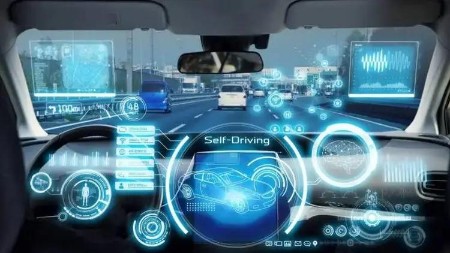
Autonomous Cars The Complete Computer Vision Course 2021

Tutorials

MyBoerse.bz Pro Member
43e286f453f84fea70cefea62411fe6a.jpeg

MP4 | Video: h264, 1280x720 | Audio: AAC, 44.1 KHz, 2 Ch
Genre: eLearning | Language: English + srt | Duration: 120 lectures (12h 38m) | Size: 5 GB
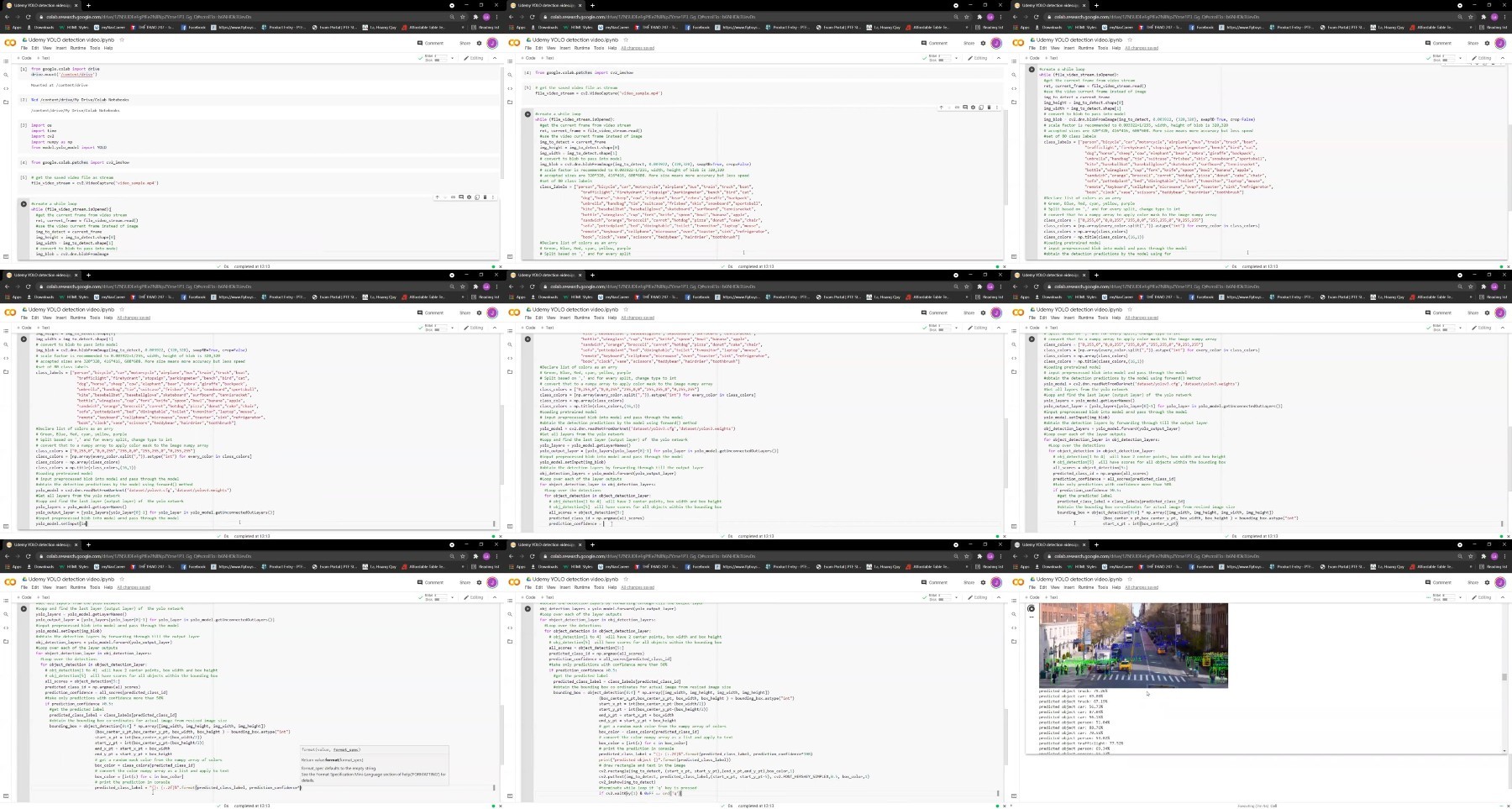
Learn OpenCV 4, YOLO, road markings and pedestrians detection, and traffic sign classification for self-driving cars

What you'll learn:
YOLO
OpenCV
Detection with the grayscale image
Colour space techniques
RGB space
HSV space
Sharpening and blurring
Edge detection and gradient calculation
Sobel
Laplacian edge detector
Canny edge detection
Affine and Projective transformation
Image translation, rotation, and resizing
Hough transform
Masking the region of interest
Bitwise_and
KNN background subtractor
MOG background subtractor
MeanShift
Kalman filter
U-NET
SegNet
Encoder and Decoder
Pyramid Scene Parsing Network
DeepLabv3+
E-Net
YOLO
OpenCV
Requirements
Basic Python programming
Description
Autonomous Cars: Computer Vision and Deep Learning
The automotive industry is experiencing a paradigm shift from conventional, human-driven vehicles into self-driving, artificial intelligence-powered vehicles. Self-driving vehicles offer a safe, efficient, and cost effective solution that will dramatically redefine the future of human mobility. Self-driving cars are expected to save over half a million lives and generate enormous economic opportunities in excess of $1 trillion dollars by 2035. The automotive industry is on a billion-dollar quest to deploy the most technologically advanced vehicles on the road.
As the world advances towards a driverless future, the need for experienced engineers and researchers in this emerging new field has never been more crucial.
The purpose of this course is to provide students with knowledge of key aspects of design and development of self-driving vehicles. The course provides students with practical experience in various self-driving vehicles concepts such as machine learning and computer vision. Concepts such as lane detection, traffic sign classification, vehicle/object detection, artificial intelligence, and deep learning will be presented. The course is targeted towards students wanting to gain a fundamental understanding of self-driving vehicles control. Basic knowledge of programming is recommended. However, these topics will be extensively covered during early course lectures; therefore, the course has no prerequisites, and is open to any student with basic programming knowledge. Students who enroll in this self-driving car course will master driverless car technologies that are going to reshape the future of transportation.
Tools and algorithms we'll cover include:
OpenCV.
Deep Learning and Artificial Neural Networks.
Convolutional Neural Networks.
YOLO.
HOG feature extraction.
Detection with the grayscale image.
Colour space techniques.
RGB space.
HSV space.
Sharpening and blurring.
Edge detection and gradient calculation.
Sobel.
Laplacian edge detector.
Canny edge detection.
Affine and Projective transformation.
Image translation, rotation, and resizing.
Hough transform.
Masking the region of interest.
Bitwise_and.
KNN background subtractor.
MOG background subtractor.
MeanShift.
Kalman filter.
U-NET.
SegNet.
Encoder and Decoder.
Pyramid Scene Parsing Network.
DeepLabv3+.
E-Net.
If you're ready to take on a brand new challenge, and learn about AI techniques that you've never seen before in traditional supervised machine learning, unsupervised machine learning, or even deep learning, then this course is for you.
Moreover, the course is packed with practical exercises that are based on real-life examples. So not only will you learn the theory, but you will also get some hands-on practice building your own models. There are five big projects on healthcare problems and one small project to practice. These projects are listed below:
Detection of road markings.
Road Sign Detection.
Detecting Pedestrian Project.
Frozen Lake environment.
Semantic Segmentation.
Vehicle Detection.
That is all. See you in class!
"If you can't implement it, you don't understand it"
Or as the great physicist Richard Feynman said: "What I cannot create, I do not understand".
My courses are the ONLY course where you will learn how to implement deep REINFORCEMENT LEARNING algorithms from scratch
Other courses will teach you how to plug in your data into a library, but do you really need help with 3 lines of code?
After doing the same thing with 10 datasets, you realize you didn't learn 10 things. You learned 1 thing, and just repeated the same 3 lines of code 10 times...
Who this course is for
Beginners who are starting to learn Computer Vision.
Undergraduate students who are studying subjects related to Artificial Intelligence.
People who want to solve their own problems using Computer Vision.
Students who want to work in companies developing Computer Vision projects.
People who want to know all areas inside Computer Vision, as well as know the problems that these techniques are able to solve.
Anyone interested in Artificial Intelligence or Computer Vision.
Data scientists who want to grow their portfolio.
Professionals who want to understand how to apply Computer Vision to real projects.
Software engineers interested in learning the algorithms that power self-driving cars.
Homepage


Recommend Download Link Hight Speed | Please Say Thanks Keep Topic Live
Links are Interchangeable - No Password - Single Extraction

 

ceda1936742dfe24ba3fc90f1681c252.jpg

Autonomous Cars: The Complete Computer Vision Course 2021
.MP4, AVC, 1280x720, 30 fps | English, AAC, 2 Ch | 12h 38m | 6.31 GB
Instructor: Hoang Quy La​

Learn OpenCV 4, YOLO, road markings and pedestrians detection, and traffic sign classification for self-driving cars

What you'll learn

YOLO
OpenCV
Detection with the grayscale image
Colour space techniques
RGB space
HSV space
Sharpening and blurring
Edge detection and gradient calculation
Sobel
Laplacian edge detector
Canny edge detection
Affine and Projective transformation
Image translation, rotation, and resizing
Hough transform
Masking the region of interest
Bitwise_and
KNN background subtractor
MOG background subtractor
MeanShift
Kalman filter
U-NET
SegNet
Encoder and Decoder
Pyramid Scene Parsing Network
DeepLabv3+
E-Net

Requirements

Basic Python programming

Description

The automotive industry is experiencing a paradigm shift from conventional, human-driven vehicles into self-driving, artificial intelligence-powered vehicles. Self-driving vehicles offer a safe, efficient, and cost effective solution that will dramatically redefine the future of human mobility. Self-driving cars are expected to save over half a million lives and generate enormous economic opportunities in excess of $1 trillion dollars by 2035. The automotive industry is on a billion-dollar quest to deploy the most technologically advanced vehicles on the road.

As the world advances towards a driverless future, the need for experienced engineers and researchers in this emerging new field has never been more crucial.

The purpose of this course is to provide students with knowledge of key aspects of design and development of self-driving vehicles. The course provides students with practical experience in various self-driving vehicles concepts such as machine learning and computer vision. Concepts such as lane detection, traffic sign classification, vehicle/object detection, artificial intelligence, and deep learning will be presented. The course is targeted towards students wanting to gain a fundamental understanding of self-driving vehicles control. Basic knowledge of programming is recommended. However, these topics will be extensively covered during early course lectures; therefore, the course has no prerequisites, and is open to any student with basic programming knowledge. Students who enroll in this self-driving car course will master driverless car technologies that are going to reshape the future of transportation.

If you're ready to take on a brand new challenge, and learn about AI techniques that you've never seen before in traditional supervised machine learning, unsupervised machine learning, or even deep learning, then this course is for you.

Moreover, the course is packed with practical exercises that are based on real-life examples. So not only will you learn the theory, but you will also get some hands-on practice building your own models. There are five big projects on healthcare problems and one small project to practice. These projects are listed below:

Detection of road markings.
Road Sign Detection.
Detecting Pedestrian Project.
Frozen Lake environment.
Semantic Segmentation.
Vehicle Detection.

That is all. See you in class!

"If you can't implement it, you don't understand it"

Or as the great physicist Richard Feynman said: "What I cannot create, I do not understand".

My courses are the ONLY course where you will learn how to implement deep REINFORCEMENT LEARNING algorithms from scratch

Other courses will teach you how to plug in your data into a library, but do you really need help with 3 lines of code?

After doing the same thing with 10 datasets, you realize you didn't learn 10 things. You learned 1 thing, and just repeated the same 3 lines of code 10 times.

Who this course is for:

Beginners who are starting to learn Computer Vision.
Undergraduate students who are studying subjects related to Artificial Intelligence.
People who want to solve their own problems using Computer Vision.
Students who want to work in companies developing Computer Vision projects.
People who want to know all areas inside Computer Vision, as well as know the problems that these techniques are able to solve.
Anyone interested in Artificial Intelligence or Computer Vision.
Data scientists who want to grow their portfolio.
Professionals who want to understand how to apply Computer Vision to real projects.
Software engineers interested in learning the algorithms that power self-driving cars.


XHoeCPQj_o.jpg


Zurück
Oben Unten