




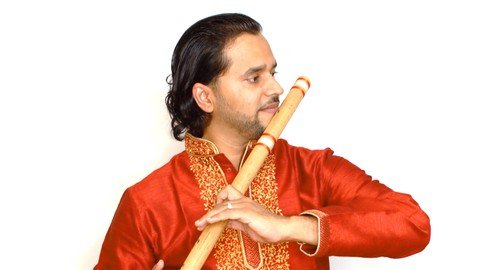
Free Download Alankarams On Carnatic Flute (Indian Bamboo)
Published 10/2023
MP4 | Video: h264, 1920x1080 | Audio: AAC, 44.1 KHz
Language: English | Size: 2.71 GB | Duration: 1h 30m
Learn how to play alankarams on flute and sing alankarams, along with Laya
What you'll learn
Alankarams with Laya
Alankarams singing with Voice
Able to learn speeds of alankarams
Video for finger positions on flute
Requirements
Basic knowledge of Vocal, finger positions of flute
Description
This course will provide content to help you master the thalams and laya structure. This is the foundation of how you can master the basics of both vocal and instrument flute.In Carnatic music, Saptha Thalams refers to the seven fundamental rhythmic cycles or time measures that provide the framework for rhythm and percussion in this South Indian classical music tradition. Each of these thalams has a specific number of beats or counts, and they are the building blocks for rhythm in Carnatic music. Here is a summary of the Saptha Thalams
 hruva Talam (Chaturasra Eka Talam): Dhruva Talam has eight beats in a cycle (chaturasra nadai), one of the most common and basic thalams used in Carnatic music.Matya Talam (Tisra Triputa Talam): Matya Talam consists of seven beats in a cycle (tisra nadai). It is also frequently used in Carnatic compositions and rhythm patterns.Rupaka Talam (Chapu Talam): Rupaka Talam has six beats in a cycle and is often used in slower, musical compositions, deviating from the usual eight-beat cycle.Jhampa Talam (Tisra Jhampa Talam): Jhampa Talam features five beats in a cycle (tisra nadai), and it is used in Carnatic music for its distinctive rhythmic pattern.Triputa Talam: Triputa Talam consists of three beats in a cycle, making it relatively simple and easy to understand. It is commonly employed for beginner-level exercises and lessons.Ata Talam (Chapu Talam): Ata Talam is a complex thalam with 14 beats (chappu nadai) and is typically used in more intricate compositions and percussion solos.Eka Talam: Eka Talam is the simplest of all, with just one beat in a cycle, making it a vital thalam for practicing and mastering the basic rhythm patterns.These seven Saptha Thalams are the foundation upon which the rhythmic complexities of Carnatic music are built. Musicians and percussionists use them to create intricate rhythmic patterns, compositions, and improvisations, enhancing the overall aesthetics of this classical music style.
Overview
Section 1: Vocal practice of alankarams
Lecture 1 Ekathalam
Lecture 2 Rupaka
Lecture 3 Dhurva Thalam
Lecture 4 Matya
Lecture 5 Jhampe
Lecture 6 Triputa Thalam
Lecture 7 Atta Thalam
Section 2: Playing Alankarams your learnt in vocal on Flute
Lecture 8 Eka Thalam
Lecture 9 Rupaka Thalam
Lecture 10 Dhruva Thalam
Lecture 11 Matya Thalam
Lecture 12 Jhampa Thalam
Lecture 13 Triputa Thalam
Lecture 14 Atta Thalam
Carnatic music Alankarams are a fundamental part of Carnatic music education, and they can be learned by anyone who has an interest in Carnatic music and is willing to put in the time and effort to learn. Here are some key points to consider: Age: There is no specific age limit for learning Alankarams in Carnatic music. People of all ages, from children to adults, can start learning. Background: You don't need any prior musical experience to start learning Alankarams. However, a basic understanding of the fundamentals of Carnatic music, such as the swaras (notes) and rhythm, will be helpful. Teacher: It's highly recommended to learn Carnatic music Alankarams from a qualified and experienced teacher. A teacher can guide you through the nuances of the music, correct your mistakes, and provide valuable feedback. Practice: Regular and consistent practice is essential to mastering Alankarams. This includes both vocal and instrumental practice. Practice sessions can range from a few minutes to hours each day, depending on your level of commitment. Patience: Learning Carnatic music, including Alankarams, can be challenging. It requires patience and perseverance. It may take some time before you start seeing significant progress. Resources: There are many online resources, books, and courses available to assist in learning Carnatic music, including Alankarams. These resources can be used in conjunction with formal lessons to enhance your understanding and practice. Performance: Eventually, as you progress, you can perform Alankarams and other Carnatic music compositions in front of an audience. This can be a rewarding experience and a way to further develop your skills. Remember that the journey of learning Carnatic music is a deeply enriching one, and while Alankarams are basic exercises, they are a foundation for more complex compositions and improvisations in this musical tradition. So, with dedication and the right guidance, anyone can learn Carnatic music Alankarams and progress in their musical journey.
Recommend Download Link Hight Speed | Please Say Thanks Keep Topic Live
No Password - Links are Interchangeable
