




Accounting For Bonds: Principles| Practices | IFRS Compliance

Published 10/2024
MP4 | Video: h264, 1920x1080 | Audio: AAC, 44.1 KHz
Language: English | Size: 1.31 GB | Duration: 2h 59m
Unlock the essential knowledge and practical skills for managing and accounting for bonds with this comprehensive guide
What you'll learn
Fundamentals of Bond Accounting: Gain a deep understanding of how bonds work, including key features, interest rates, and bond valuation.
Bond Issuance and Market Dynamics: Explore how bonds are issued, the concept of accrued interest, and the impact of market interest rates on bond prices.
Amortization Techniques: Learn the different methods of bond premium amortization, including straight-line and effective interest rate methods.
Bond Valuation: Master the calculation of present value, interest expenses, and bond premium amortization using real-world examples.
International Accounting Standards: Understand bond accounting under IFRS and the differences between international standards and local GAAP.
Practical Applications: Work through real-life examples to reinforce concepts and prepare for handling bond accounting in professional scenarios.
Requirements
Basic Accounting Knowledge: A foundational understanding of accounting principles and financial statements.
Familiarity with Financial Terminology: Knowledge of terms like interest, amortization, and present value will be helpful.
Mathematical Skills: Basic math and calculation skills to handle bond valuations, interest rate calculations, and amortization schedules.
Access to Spreadsheet Software: Familiarity with tools like Excel or Google Sheets for bond-related calculations (optional but recommended).
Description
Bonds play a crucial role in corporate finance and investments, offering businesses a way to raise capital and providing investors with relatively safe investment opportunities. This course, "Mastering Bond Accounting," provides a comprehensive overview of how bonds work, how to account for them, and how to ensure compliance with accounting standards like IFRS. Starting with the basic features of bonds, the course dives deep into key concepts such as interest calculation, coupon rates, bond amortization, and practical examples. Whether you're an accountant, finance professional, or student, this course will equip you with the necessary tools to navigate bond accounting with confidence.Section 1: IntroductionIn this introductory section, students will learn about the basic principles of bond accounting. You will explore how bonds are used as a financial instrument, the role they play in raising capital, and their importance in corporate and government finance. The session will also cover a general overview of how bond accounting fits into the larger financial landscape, providing students with a foundational understanding.Section 2: Bonds - Structure and FeaturesThis section dives deeper into the intricacies of bonds. It begins by explaining how bonds work, including the key features of bonds such as coupon rates, maturity dates, and face value. Students will also learn about different types of bonds and how interest and dividends are calculated. Practical examples will be used to showcase how these concepts apply in real-world scenarios. Additional topics such as bond coupon rate structures, present value concepts, and how bonds are issued with or without accrued interest will be discussed to give a holistic view of bond mechanisms.Section 3: Calculating Bond Values and InterestIn this section, students will focus on calculating bond values using various methods. The concept of present value and how it applies to bond valuation will be covered in detail. Topics like the use of market interest rates and the amortization of bond premiums will help students master the intricacies of bond value calculations. This section will also guide students through real examples to ensure they are able to calculate bond values and interest expenses accurately.Section 4: Bond Amortization MethodsAmortization is key in bond accounting, and this section introduces students to the two primary methods: straight-line and effective interest rate. A comparison of the methods will be made, with examples from real-world scenarios such as P Corporation, to provide clarity on which approach is best suited for different situations. The course will guide students through the step-by-step process of calculating interest expenses using both methods. Additionally, this section will introduce the importance of compliance with international accounting standards (IFRS), with a detailed explanation of the standards' impact on bond accounting.ConclusionThis course concludes with a summary of the key concepts covered throughout the course, such as the structure of bonds, interest rate calculation, amortization methods, and IFRS standards. By the end of the course, students will be equipped with the knowledge and practical skills required to confidently handle bond accounting tasks in their professional careers. With real-world examples and hands-on practice, you will have a strong understanding of the role bonds play in corporate finance and how to manage them effectively in the context of accounting.
Overview
Section 1: Introduction
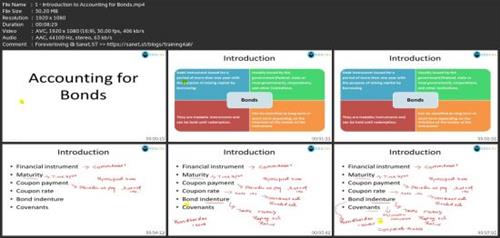
Lecture 1 Introduction to Accounting for Bonds
Section 2: Bond
Lecture 2 How Bonds Work
Lecture 3 Bond Interest and Dividend
Lecture 4 Key Features
Lecture 5 Example of Bond with Features
Lecture 6 Coupon Rate Structures
Lecture 7 Preset Value Concept
Lecture 8 Accrued Interest
Lecture 9 Bond Issued with No Accrued Interest
Lecture 10 Market Interest Rate
Lecture 11 Bond Premium with Straight Line Amortization
Lecture 12 Annual Straight Line Amortization
Lecture 13 Sell Price of Bond
Section 3: Calculate and Interest Value
Lecture 14 Calculate Preset Value
Lecture 15 Calculate Preset Value Continues
Lecture 16 Use Market Interest Rate
Lecture 17 Amortization of Bond Premium
Lecture 18 Amortization of Bond Premium Continues
Section 4: Method
Lecture 19 Effective Interest Rate Method
Lecture 20 Comparison of Amortization Method
Lecture 21 Example of P Corporation
Lecture 22 Calculating Interest Expenses
Lecture 23 Understand IFRS
Lecture 24 Understand IFRS Continues
Accounting and Finance Students: Those looking to deepen their knowledge of bond accounting and financial instruments.,Finance Professionals: Accountants, auditors, and financial analysts working with bond investments or responsible for corporate bond reporting.,Investors and Portfolio Managers: Individuals interested in understanding bond pricing, interest calculations, and amortization methods.,Business Owners and CFOs: Professionals who manage or oversee bond issuance and financial reporting in their organizations.,Anyone Interested in Bonds: Learners with an interest in expanding their financial knowledge, particularly around bonds and their accounting treatment.
Say "Thank You"
rapidgator.net:
ddownload.com:
Published 10/2024
MP4 | Video: h264, 1920x1080 | Audio: AAC, 44.1 KHz
Language: English | Size: 1.31 GB | Duration: 2h 59m
Unlock the essential knowledge and practical skills for managing and accounting for bonds with this comprehensive guide
What you'll learn
Fundamentals of Bond Accounting: Gain a deep understanding of how bonds work, including key features, interest rates, and bond valuation.
Bond Issuance and Market Dynamics: Explore how bonds are issued, the concept of accrued interest, and the impact of market interest rates on bond prices.
Amortization Techniques: Learn the different methods of bond premium amortization, including straight-line and effective interest rate methods.
Bond Valuation: Master the calculation of present value, interest expenses, and bond premium amortization using real-world examples.
International Accounting Standards: Understand bond accounting under IFRS and the differences between international standards and local GAAP.
Practical Applications: Work through real-life examples to reinforce concepts and prepare for handling bond accounting in professional scenarios.
Requirements
Basic Accounting Knowledge: A foundational understanding of accounting principles and financial statements.
Familiarity with Financial Terminology: Knowledge of terms like interest, amortization, and present value will be helpful.
Mathematical Skills: Basic math and calculation skills to handle bond valuations, interest rate calculations, and amortization schedules.
Access to Spreadsheet Software: Familiarity with tools like Excel or Google Sheets for bond-related calculations (optional but recommended).
Description
Bonds play a crucial role in corporate finance and investments, offering businesses a way to raise capital and providing investors with relatively safe investment opportunities. This course, "Mastering Bond Accounting," provides a comprehensive overview of how bonds work, how to account for them, and how to ensure compliance with accounting standards like IFRS. Starting with the basic features of bonds, the course dives deep into key concepts such as interest calculation, coupon rates, bond amortization, and practical examples. Whether you're an accountant, finance professional, or student, this course will equip you with the necessary tools to navigate bond accounting with confidence.Section 1: IntroductionIn this introductory section, students will learn about the basic principles of bond accounting. You will explore how bonds are used as a financial instrument, the role they play in raising capital, and their importance in corporate and government finance. The session will also cover a general overview of how bond accounting fits into the larger financial landscape, providing students with a foundational understanding.Section 2: Bonds - Structure and FeaturesThis section dives deeper into the intricacies of bonds. It begins by explaining how bonds work, including the key features of bonds such as coupon rates, maturity dates, and face value. Students will also learn about different types of bonds and how interest and dividends are calculated. Practical examples will be used to showcase how these concepts apply in real-world scenarios. Additional topics such as bond coupon rate structures, present value concepts, and how bonds are issued with or without accrued interest will be discussed to give a holistic view of bond mechanisms.Section 3: Calculating Bond Values and InterestIn this section, students will focus on calculating bond values using various methods. The concept of present value and how it applies to bond valuation will be covered in detail. Topics like the use of market interest rates and the amortization of bond premiums will help students master the intricacies of bond value calculations. This section will also guide students through real examples to ensure they are able to calculate bond values and interest expenses accurately.Section 4: Bond Amortization MethodsAmortization is key in bond accounting, and this section introduces students to the two primary methods: straight-line and effective interest rate. A comparison of the methods will be made, with examples from real-world scenarios such as P Corporation, to provide clarity on which approach is best suited for different situations. The course will guide students through the step-by-step process of calculating interest expenses using both methods. Additionally, this section will introduce the importance of compliance with international accounting standards (IFRS), with a detailed explanation of the standards' impact on bond accounting.ConclusionThis course concludes with a summary of the key concepts covered throughout the course, such as the structure of bonds, interest rate calculation, amortization methods, and IFRS standards. By the end of the course, students will be equipped with the knowledge and practical skills required to confidently handle bond accounting tasks in their professional careers. With real-world examples and hands-on practice, you will have a strong understanding of the role bonds play in corporate finance and how to manage them effectively in the context of accounting.
Overview
Section 1: Introduction
Lecture 1 Introduction to Accounting for Bonds
Section 2: Bond
Lecture 2 How Bonds Work
Lecture 3 Bond Interest and Dividend
Lecture 4 Key Features
Lecture 5 Example of Bond with Features
Lecture 6 Coupon Rate Structures
Lecture 7 Preset Value Concept
Lecture 8 Accrued Interest
Lecture 9 Bond Issued with No Accrued Interest
Lecture 10 Market Interest Rate
Lecture 11 Bond Premium with Straight Line Amortization
Lecture 12 Annual Straight Line Amortization
Lecture 13 Sell Price of Bond
Section 3: Calculate and Interest Value
Lecture 14 Calculate Preset Value
Lecture 15 Calculate Preset Value Continues
Lecture 16 Use Market Interest Rate
Lecture 17 Amortization of Bond Premium
Lecture 18 Amortization of Bond Premium Continues
Section 4: Method
Lecture 19 Effective Interest Rate Method
Lecture 20 Comparison of Amortization Method
Lecture 21 Example of P Corporation
Lecture 22 Calculating Interest Expenses
Lecture 23 Understand IFRS
Lecture 24 Understand IFRS Continues
Accounting and Finance Students: Those looking to deepen their knowledge of bond accounting and financial instruments.,Finance Professionals: Accountants, auditors, and financial analysts working with bond investments or responsible for corporate bond reporting.,Investors and Portfolio Managers: Individuals interested in understanding bond pricing, interest calculations, and amortization methods.,Business Owners and CFOs: Professionals who manage or oversee bond issuance and financial reporting in their organizations.,Anyone Interested in Bonds: Learners with an interest in expanding their financial knowledge, particularly around bonds and their accounting treatment.
Screenshots
Say "Thank You"
rapidgator.net:
ddownload.com:
