



0daytutorial
MyBoerse.bz Pro Member

64-Bit Arm Assembly Foundation Course For Ethical Hackers
Published 12/2024
MP4 | Video: h264, 1920x1080 | Audio: AAC, 44.1 KHz
Language: English | Size: 11.58 GB | Duration: 23h 14m
Master ARM 64-bit Assembly for Ethical Hacking: Write, Analyze ARM assembly Code for Enhanced Cybersecurity Skills
What you'll learn
Understanding ARM Architecture: Introduction to ARM architecture and its significance in modern computing and cybersecurity.
Installing and configuring tools needed for ARM 64-bit assembly programming, such as assemblers, debuggers, and emulators.
Basic Assembly Syntax: Writing simple ARM 64-bit assembly programs and understanding the syntax and structure of assembly language.
Detailed overview of the ARM 64-bit instruction set, including data processing instructions, control flow instructions, and memory access i
Registers and Data Types: Understanding ARM 64-bit registers, data types, and their usage in assembly programming.
Understanding Memory Layout: Learning about memory segments (text, data, stack, and heap) and their roles in program execution.
Addressing Modes: Exploring different addressing modes in ARM 64-bit assembly and how they are used to access memory.
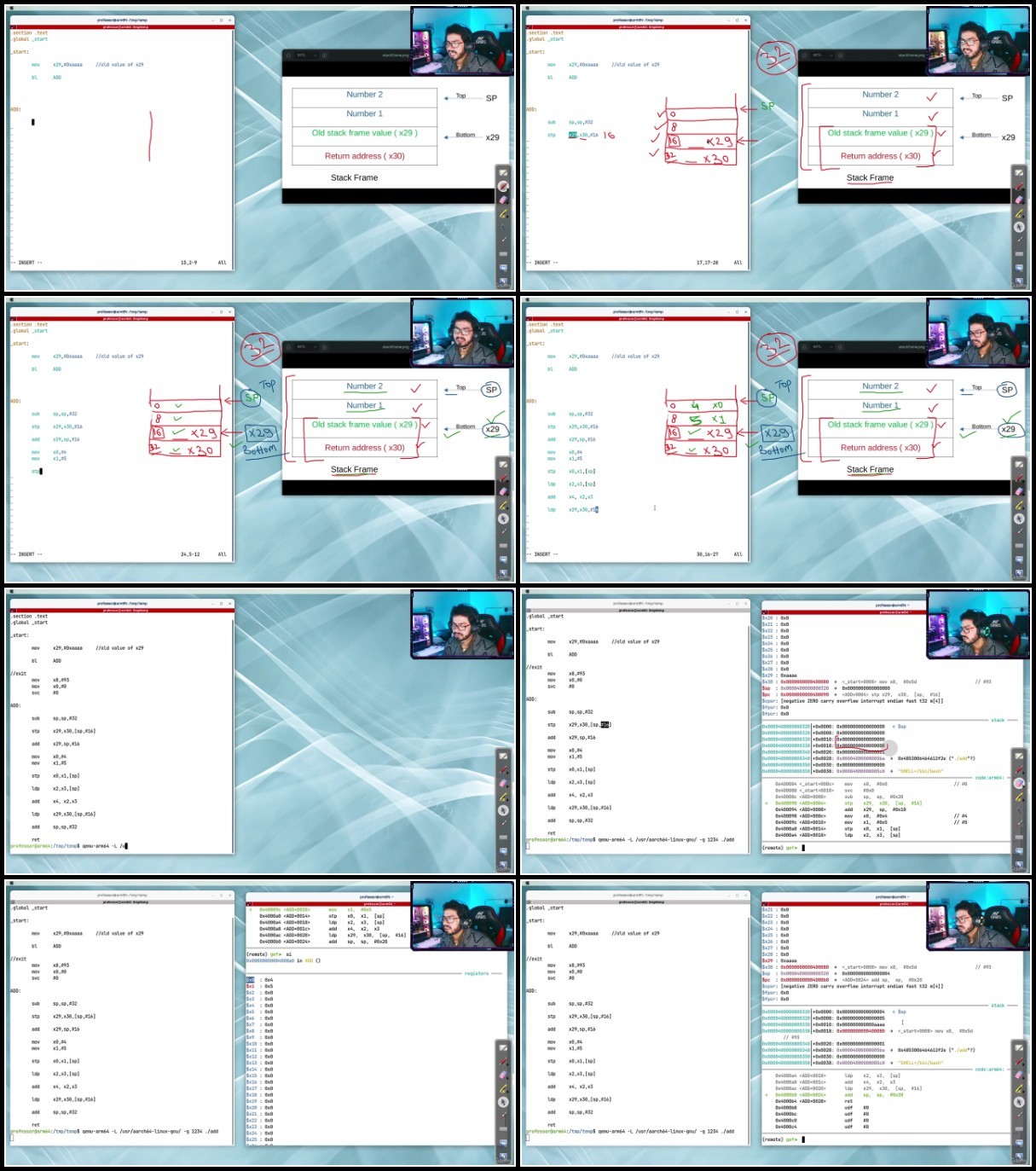
Function Calls and Stack Management: Writing and calling functions, managing the stack, and understanding calling conventions.
Conditional Execution and Looping Constructs: Implementing conditional statements and loops in assembly language.
Requirements
Linux command line basics
C programming basics.
A keen interest in ethical hacking, cyber security, or reverse engineering.
Description
Unlock the power of ARM 64-bit assembly programming with our comprehensive course tailored for ethical hackers and cyber security professionals. In today's tech landscape, ARM architecture is ubiquitous in mobile devices, IoT, and embedded systems. This course is designed to provide you with the essential skills to write, analyze, and reverse engineer ARM 64-bit assembly code, elevating your expertise in cyber security.What You'll Learn:ARM Architecture Fundamentals: Understand the ARM 64-bit architecture, instruction sets, and how they differ from other processors.Assembly Language Basics: Master the basics of ARM 64-bit assembly syntax, data types, and registers.Memory Management: Learn about memory layout, addressing modes, and effective memory management techniques.Advanced Programming Techniques: Implement advanced assembly language constructs, including function calls, stack management, and conditional execution.Practical Ethical Hacking Applications: Apply your knowledge to real-world scenarios. Reverse engineer ARM-based binaries, develop exploits, and write shellcode.Security Research and Malware Analysis: Gain insights into analyzing ARM-based malware and conducting vulnerability assessments.Why This Course?This course offers you a hands-on approach with practical exercises, real-world examples to ensure you can apply what you learn directly to your cyber security work. Join now to master ARM 64-bit assembly and enhance your ethical hacking skills!Enroll today and take the first step towards becoming an expert in ARM 64-bit assembly and ethical hacking.
Overview
Section 1: Introduction
Lecture 1 Introduction
Lecture 2 Why should we learn ARM assembly language ?
Section 2: Building the foundation for ARM assembly programming
Lecture 3 How a computer system works ?
Lecture 4 How does an ARM CPU works internally ?
Lecture 5 ARM CPU registers and its workings
Lecture 6 PSTATE register ( flag register ) working in ARM CPU.
Lecture 7 Memory layout of a Linux program
Section 3: Lab machine configuration
Lecture 8 Lab machine setup for arm assembly programming
Section 4: Hello World in ARM assembly
Lecture 9 Basic ARM assembly program structure
Lecture 10 Concept of system calls in Linux Operating system
Lecture 11 Printing "Hello World" in ARM assembly programming
Lecture 12 Debugging "Hello World" ARM assembly program in GDB
Section 5: Loading data into registers from memory in ARM assembly programming
Lecture 13 How to define data in ARM assembly programming ?
Lecture 14 How to examine our ARM binary program data dynamically in GDB
Lecture 15 How to load the data from memory into ARM CPU registers using load instruction
Lecture 16 Loading a single byte data from an array using register relative addressing
Lecture 17 Loading a word (4 byte ) data from an array using register relative addressing
Lecture 18 Loading 8 byte sized data from an array using register relative addressing
Lecture 19 Loading the data using Pre-index register relative addressing method
Lecture 20 Loading the data using Post-index register relative addressing method
Lecture 21 Loading the data using base indexed memory addressing
Lecture 22 Loading page address into registers in arm assembly programming
Lecture 23 Loading the data in pairs in registers in arm assembly programming
Section 6: Storing the data from register into memory in arm assembly programming
Lecture 24 Storing our data from register into memory using store ( str ) instruction
Lecture 25 Storing data from the register into an array in memory
Lecture 26 Storing data from register using pre-indexed register relative addressing
Lecture 27 Storing data from register using post-indexed register relative addressing
Lecture 28 Storing the data in pairs from register to memory
Section 7: Branching in arm assembly programming
Lecture 29 Loading a label memory address into register
Lecture 30 How to use branch instruction in arm assembly programming
Lecture 31 Jumping to memory location using a register in branch instruction in assembly
Lecture 32 Using branch and link instruction to call a function in arm assembly programming
Lecture 33 Using a condition in branch instruction in arm assembly programming
Section 8: Bit shifting operations in arm assembly programming
Lecture 34 Shifting bits in left and right direction in arm assembly programming
Lecture 35 How negative numbers are converted in binary
Lecture 36 Moving bits using mov and lsl instruction in arm assembly programming
Lecture 37 Using asr instruction to shift right in arm assembly programming
Lecture 38 Rotating the bits in the right direction in arm assembly programming
Lecture 39 BitField move instruction to move bits into register in arm assembly programming
Section 9: Arithmetic Operations in arm assembly programming
Lecture 40 Adding numbers in arm assembly programming
Lecture 41 Subtraction of numbers in arm assembly programming
Lecture 42 Addition with status in arm assembly programming
Lecture 43 How subtraction works in binary ?
Lecture 44 Subtraction with status in arm assembly programming
Lecture 45 Multiplication in arm assembly programming
Lecture 46 Multiply with add and subtract in arm assembly
Lecture 47 Multiply and negate operation
Lecture 48 Dividing numbers in arm assembly programming
Section 10: Logical operations in arm assembly programming
Lecture 49 AND logical operation in arm assembly programming
Lecture 50 OR logical operation in arm assembly programming
Lecture 51 XOR logical operation in arm assembly programming
Lecture 52 NOT operation in arm assembly programming
Lecture 53 Comparing two values in arm assembly programming
Section 11: Functions in arm assembly
Lecture 54 How to use functions in arm assembly programming
Lecture 55 How a program knows where to return after function call
Lecture 56 How functions works with the stack memory
Lecture 57 How stack frame is created on stack for functions in arm assembly ?
Lecture 58 Creating a stack frame for a function in arm assembly programming
Lecture 59 An example of stack frame creation in arm assembly
Lecture 60 Effect of normal indexed addressing on stack memory
Lecture 61 Effect of pre-indexed addressing on stack memory
Lecture 62 Effect of normal- indexed addressing of ldp instruction on stack memory
Lecture 63 Effect of post-indexed addressing of ldp instruction on stack memory
Section 12: Basics of Reverse Engineering in arm binary
Lecture 64 Reverse Engineering Basics
Lecture 65 Performing static analysis of Hello World ARM binary
Lecture 66 Understanding code construct of Hello World program
Lecture 67 Performing dynamic analysis of Hello World arm binary
Lecture 68 Tracing the main function arguments in arm binary using dynamic analysis
Lecture 69 Understanding how the function variables are used with registers & memory
Lecture 70 Tracing the function arguments in disassembly
Ethical Hackers and Penetration Testers,Cybersecurity Professionals,Reverse Engineers and Malware Analysts,Computer Science Students and Enthusiasts,Software Developers and Engineers,IoT Developers,Hobbyist Hackers and Tinkerers,Security Researchers