




• Regeln für den Video-Bereich:

    In den Börsenbereich gehören nur Angebote die bereits den Allgemeinen Regeln entsprechen.

    Einteilung

    - Folgende Formate gehören in die angegeben Bereiche:
    - Filme: Encodierte Filme von BluRay, DVD, R5, TV, Screener sowie Telesyncs im Format DivX, XviD und x264.
    - DVD: Filme im Format DVD5, DVD9 und HD2DVD.
    - HD: Encodierte Filme mit der Auflösung 720p oder darüber von BluRay, DVD, R5, TV, Screener sowie Telesyncs im Format x264.
    - 3D: Encodierte Filme von BluRay, die in einem 3D Format vorliegen. Dies gilt auch für Dokus, Animation usw.
    - Serien: Cartoon/Zeichentrick, Anime, Tutorials, Dokumentationen, Konzerte/Musik, Sonstiges sind demnach in die entsprechenden Bereiche einzuordnen, auch wenn sie beispielsweise im High Definition-Format oder als DVD5/DVD9/HD2DVD vorliegen. Ausnahme 3D.
    - Bereich Englisch: Englische Releases gehören immer in diesen Bereich.
    - Bereich Talk: Der Bereich, in dem über die Releases diskutiert werden kann, darf, soll und erwünscht ist.


    Angebot/Beitrag erstellen

    - Ein Beitrag darf erst dann erstellt werden, wenn der Upload bei mindestens einem OCH komplett ist. Platzhalter sind untersagt.
    - Bei einem Scenerelease hat der Threadtitel ausschließlich aus dem originalen, unveränderten Releasenamen zu bestehen. Es dürfen keine Veränderungen wie z.B. Sterne, kleine Buchstaben o.ä. vorgenommen werden. Ausnahme Serienbörse:
    - Bei einem Sammelthread für eine Staffel entfällt aus dem Releasename natürlich der Name der Folge. Beispiel: Die Simpsons S21 German DVDRip XviD - ITG
    - Dementsprechend sind also u.a. verboten: Erweiterungen wie "Tipp", "empfehlenswert", "only", "reup", usw. / jegliche andere Zusatzinformation oder Ergänzung, welche nicht in obiger Beschreibung zu finden ist.

    Aufbau des Angebots und Threadtitel

    Der Titel nach folgendem Muster erstellt zu werden. <Name> [3D] [Staffel] [German] <Jahr> <Tonspur> [DL] [Auflösung] <Quelle> <Codec> - <Group>
    Beispiel: The Dark Knight German 2008 AC3 DVDRip XviD - iND
    Beispiel: The Dark Knight 2008 DTS DL BDRip x264 - iND
    Beispiel: The Dark Knight 2008 AC3 DL BDRip XviD - iND
    Beispiel: The Dark Knight German 2008 AC3 720p BluRay x264 iND
    Beispiel: The Dark Knight 2008 DTS DL 1080p BluRay x264 iND
    Beispiel: Die Simpsons S01 German AC3 DVDRip XviD iND
    Beispiel: Die Simpsons S20 German AC3 720p BluRay x264 iND
    Beispiel: Sword Art Online II Ger Sub 2014 AAC 1080p WEBRip x264 - peppermint
    Entsprechend sind also u.a. verboten: Sonderzeichen wie Klammern, Sterne, Ausrufezeichen, Unterstriche, Anführungszeichen / Erweiterungen wie "Tipp", "empfehlenswert", "only", "reup", usw. / jegliche andere Zusatzinformation oder Ergänzung, welche nicht in obiger Beschreibung zu finden ist
    Ausnahmen hiervon können in den Bereichen geregelt sein.

    Die Beiträge sollen wie folgt aufgebaut werden:
    Überschrift entspricht dem Threadtitel
    Cover
    kurze Inhaltsbeschreibung
    Format, Größe, Dauer sind gut lesbar für Downloader außerhalb des Spoilers zu vermerken
    Nfo sind immer Anzugeben und selbige immer im Spoiler in Textform.
    Sind keine Nfo vorhanden z.B. Eigenpublikationen, sind im Spoiler folgende Dateiinformationen zusätzlich anzugeben :
    Quelle
    Video (Auflösung und Bitrate)
    Ton (Sprache, Format und Bitrate der einzelnen Spuren)
    Untertitel (sofern vorhanden)
    Hosterangabe in Textform außerhalb eines Spoiler mit allen enthaltenen Hostern.
    Bei SD kann auf diese zusätzlichen Dateiinformationen verzichtet werden.

    Alle benötigten Passwörter sind, sofern vorhanden, in Textform im Angebot anzugeben.
    Spoiler im Spoiler mit Kommentaren :"Schon Bedankt?" sind unerwünscht.


    Releases

    - Sind Retail-Release verfügbar, sind alle anderen Variationen untersagt. Ausnahmen: Alle deutschen Retail-Release sind CUT, in diesem Fall sind dubbed UNCUT-Release zulässig.
    - Im Serien-Bereich gilt speziell: Wenn ein Retail vor Abschluss einer laufenden Staffel erscheint, darf diese Staffel noch zu Ende gebracht werden.62
    - Gleiche Releases sind unbedingt zusammenzufassen. Das bedeutet, es ist zwingend erforderlich, vor dem Erstellen eines Themas per Suchfunktion zu überprüfen, ob bereits ein Beitrag mit demselben Release besteht. Ist dies der Fall, ist der bereits vorhandene Beitrag zu verwenden.
    - P2P und Scene Releases dürfen nicht verändert oder gar unter einem iND Tag eingestellt werden.


    Support, Diskussionen und Suche

    - Supportanfragen sind entweder per PN oder im Bereich Talk zu stellen.
    - Diskussionen und Bewertungen sind im Talk Bereich zu führen. Fragen an die Uploader haben ausschließlich via PN zu erfolgen, und sind in den Angeboten untersagt.
    - Anfragen zu Upload-Wünschen sind nur im Bereich Suche Video erlaubt. Antworten dürfen nur auf Angebote von MyBoerse.bz verlinkt werden.


    Verbote

    - Untersagt sind mehrere Formate in einem einzigen Angebotsthread, wie beispielsweise das gleichzeitige Anbieten von DivX/XviD, 720p und 1080p in einem Thread. Pro Format, Release und Auflösung ist ein eigener Thread zu eröffnen.
    - Grundsätzlich ebenso verboten sind Dupes. Uploader haben sich an geeigneter Stelle darüber zu informieren, ob es sich bei einem Release um ein Dupe handelt.
    - Gefakte, nur teilweise lauffähige oder unvollständige Angebote sind untersagt. Dies gilt auch für eigene Publikationen, die augenscheinlich nicht selbst von z.B. einer DVD gerippt wurden. Laufende Serien, bei denen noch nicht alle Folgen verfügbar sind, dürfen erstellt und regelmäßig geupdatet werden.
    - Untersagt sind Angebote, welche nur und ausschließlich in einer anderen Sprache als deutsch oder englisch vorliegen. Ausnahmen sind VORHER mit den Moderatoren zu klären.


    Verstoß gegen die Regeln

    - Angebote oder Beiträge, die gegen die Forenregeln verstoßen, sind über den "Melden"-Button im Beitrag zu melden.
  • Bitte registriere dich zunächst um Beiträge zu verfassen und externe Links aufzurufen.

*** Bestes IPTV *** bester Preis *** gratis Test ***


Deep Learning Convolutional Neural Networks with Python (2024)

Tutorials

MyBoerse.bz Pro Member
c19317083064f74783c1553359983090.jpeg

Free Download Deep Learning Convolutional Neural Networks with Python (2024)
Published 3/2024
Created by Dr. Mazhar Hussain
MP4 | Video: h264, 1280x720 | Audio: AAC, 44.1 KHz, 2 Ch
Genre: eLearning | Language: English | Duration: 27 Lectures ( 4h 13m ) | Size: 2 GB

Deep Learning and Computer Vision using Convolutional Neural Networks with Python, Pytorch. Train, Test, Deploy Models
What you'll learn:
Deep Convolutional Neural Networks with Python and Pytorch Basics to Expert
Introduction to Deep Learning and its Building Blocks Artificial Neurons
Define Convolutional Neural Network Architecture from Scratch with Python and Pytorch
Hyperparameters Optimization For Convolutional Neural Networks to Improve Model Performance
Custom Datasets with Augmentations to Increase Image Data Variability
Training and Testing Convolutional Neural Network using Pytorch
Performance Metrics (Accuracy, Precision, Recall, F1 Score) to Evaluate CNNs
Visualize Confusion Matrix and Calculate Precision, Recall, and F1 Score
Advanced CNNs for Segmentation, Object tracking, and Pose Estimation.
Pretrained Convolutional Neural Networks and their Applications
Transfer Learning using Convolutional Neural Networks Models
Convolutional Neural Networks Encoder Decoder Architectures
YOLO Convolutional Neural Networks for Computer Vision Tasks
Region-based Convolutional Neural Networks for Object Detection
Requirements:
A Google Gmail account is required to get started with Google Colab to write Python Code
Python Programming experience is an advantage but not required
Description:
Are you ready to unlock the power of deep learning and revolutionize your career? Dive into the captivating realm of Deep Learning with our comprehensive course Deep Learning: Convolutional Neural Networks (CNNs) using Python and Pytorch. Discover the power and versatility of CNNs, a cutting-edge technology revolutionizing the field of artificial intelligence. With hands-on Python tutorials, you'll unravel the intricacies of CNN architectures, mastering their design, implementation, and optimization. One of the key advantages of deep CNN is its ability to automatically learn features at different levels of abstraction. Lower layers of the network learn low-level features, such as edges or textures, while higher layers learn more complex and abstract features. This hierarchical representation allows deep learning models to capture and understand complex patterns in the data, enabling them to excel in tasks such as image recognition, natural language processing, speech recognition, and many others.Introducing our comprehensive deep CNNs with python course, where you'll dive deep into Convolutional Neural Networks and emerge with the skills you need to succeed in the modern era of AI. Computer Vision refers to AI algorithms designed to extract knowledge from images or videos. Computer vision is a field of artificial intelligence (AI) that enables computers to understand and interpret visual information from digital images or videos. It involves developing deep learning algorithms and techniques that allow machines to analyze, process, and extract meaningful insights from visual data, much like the human visual system. Convolutional Neural Networks (CNNs) are most commonly used Deep Learning technique for computer vision tasks. CNNs are well-suited for processing grid-like input data, such as images, due to their ability to capture spatial hierarchies and local patterns.In today's data-driven world, Convolutional Neural Networks stand at the forefront of image recognition, object detection, and visual understanding tasks. Understanding CNNs is not only essential for aspiring data scientists and machine learning engineers but also for professionals seeking to leverage state-of-the-art technology to drive innovation in various domains. From self-driving cars and medical imaging to facial recognition and augmented reality, CNNs find applications across diverse industries. Whether you're interested in revolutionizing healthcare, enhancing autonomous systems, or developing cutting-edge computer vision applications, this course equips you with the knowledge and skills to excel in any CNN-related endeavor.Course Key Learning Outcomes:Deep Convolutional Neural Networks with Python and Pytorch Basics to ExpertIntroduction to Deep Learning and its Building Blocks Artificial NeuronsDefine Convolutional Neural Network Architecture from Scratch with Python and PytorchHyperparameters Optimization For Convolutional Neural Networks to Improve Model PerformanceCustom Datasets with Augmentations to Increase Image Data VariabilityTraining and Testing Convolutional Neural Network using PytorchPerformance Metrics (Accuracy, Precision, Recall, F1 Score) to Evaluate CNNsVisualize Confusion Matrix and Calculate Precision, Recall, and F1 ScoreAdvanced CNNs for Segmentation, Object tracking, and Pose Estimation.Pretrained Convolutional Neural Networks and their ApplicationsTransfer Learning using Convolutional Neural Networks ModelsConvolutional Neural Networks Encoder Decoder ArchitecturesYOLO Convolutional Neural Networks for Computer Vision TasksRegion-based Convolutional Neural Networks for Object DetectionIn this comprehensive course you will start from building Deep Convolutional Neural Networks architecture from scratch with Dataset Augmentation with different transformations to increase image variability , HyperParameteres Optimization before training the model to improve performance, Model validation on Test Images, Performance metrics calculation including Accuracy, Precision, Recall, F1 score and Confusion matrix visualization to see detailed insights into the model's performance, beyond simple metrics. Then you will move forward to advanced CNN Architectures Including RESNT, ALEXNET for Images Classification, UNET, PSPNET encoder decoder Architectures for semantic segmentation, Region based CNN for OD and YOLO CNNs for real time object Detection, classification instance segmentation, object tracking, and pose estimation.Join us on this exciting journey, where you'll not only grasp the core concepts but also unlock the door to advanced CNN architectures, equipping yourself with the skills needed to conquer the most challenging computer vision tasks with confidence and expertise. You will follow a complete pipeline to deep dive into CNN for real world applications. I will provide you the complete python code to build, train, test, and deploy CNN from scratch for different Artificial Intelligence tasks.Don't miss out on this incredible opportunity to take your skills to the next level. Enroll now and join the thousands of students who've already transformed their careers with our courses. " Thank you and see you inside the class" !
Who this course is for:
This course is designed for individuals with a keen interest in Deep Learning and Convolutional Neural Networks (CNNs) with Python and Pytorch to solve Real-World AI Problems.
Whether you're a beginner looking to build a strong foundation in Computer Vision, Object Tracking, Segmentation, Pose Estimation, Classification, Object Detection or an experienced professional aiming to enhance your skills, this course provides valuable insights and hands-on experience with CNNs.
Homepage


Recommend Download Link Hight Speed | Please Say Thanks Keep Topic Live
No Password - Links are Interchangeable

 

636614beff5b0bc9dae0c5933c21cd23.jpg

Deep Learning : Convolutional Neural Networks With Python
Published 3/2024
MP4 | Video: h264, 1920x1080 | Audio: AAC, 44.1 KHz
Language: English | Size: 2.41 GB | Duration: 4h 13m​

Deep Learning and Computer Vision using Convolutional Neural Networks with Python, Pytorch. Train, Test, Deploy Models

What you'll learn

Deep Convolutional Neural Networks with Python and Pytorch Basics to Expert

Introduction to Deep Learning and its Building Blocks Artificial Neurons

Define Convolutional Neural Network Architecture from Scratch with Python and Pytorch

Hyperparameters Optimization For Convolutional Neural Networks to Improve Model Performance

Custom Datasets with Augmentations to Increase Image Data Variability

Training and Testing Convolutional Neural Network using Pytorch

Performance Metrics (Accuracy, Precision, Recall, F1 Score) to Evaluate CNNs

Visualize Confusion Matrix and Calculate Precision, Recall, and F1 Score

Advanced CNNs for Segmentation, Object tracking, and Pose Estimation.

Pretrained Convolutional Neural Networks and their Applications

Transfer Learning using Convolutional Neural Networks Models

Convolutional Neural Networks Encoder Decoder Architectures

YOLO Convolutional Neural Networks for Computer Vision Tasks

Region-based Convolutional Neural Networks for Object Detection

Requirements

A Google Gmail account is required to get started with Google Colab to write Python Code

Python Programming experience is an advantage but not required

Description

Are you ready to unlock the power of deep learning and revolutionize your career? Dive into the captivating realm of Deep Learning with our comprehensive course Deep Learning: Convolutional Neural Networks (CNNs) using Python and Pytorch. Discover the power and versatility of CNNs, a cutting-edge technology revolutionizing the field of artificial intelligence. With hands-on Python tutorials, you'll unravel the intricacies of CNN architectures, mastering their design, implementation, and optimization. One of the key advantages of deep CNN is its ability to automatically learn features at different levels of abstraction. Lower layers of the network learn low-level features, such as edges or textures, while higher layers learn more complex and abstract features. This hierarchical representation allows deep learning models to capture and understand complex patterns in the data, enabling them to excel in tasks such as image recognition, natural language processing, speech recognition, and many others.Introducing our comprehensive deep CNNs with python course, where you'll dive deep into Convolutional Neural Networks and emerge with the skills you need to succeed in the modern era of AI. Computer Vision refers to AI algorithms designed to extract knowledge from images or videos. Computer vision is a field of artificial intelligence (AI) that enables computers to understand and interpret visual information from digital images or videos. It involves developing deep learning algorithms and techniques that allow machines to analyze, process, and extract meaningful insights from visual data, much like the human visual system. Convolutional Neural Networks (CNNs) are most commonly used Deep Learning technique for computer vision tasks. CNNs are well-suited for processing grid-like input data, such as images, due to their ability to capture spatial hierarchies and local patterns.In today's data-driven world, Convolutional Neural Networks stand at the forefront of image recognition, object detection, and visual understanding tasks. Understanding CNNs is not only essential for aspiring data scientists and machine learning engineers but also for professionals seeking to leverage state-of-the-art technology to drive innovation in various domains. From self-driving cars and medical imaging to facial recognition and augmented reality, CNNs find applications across diverse industries. Whether you're interested in revolutionizing healthcare, enhancing autonomous systems, or developing cutting-edge computer vision applications, this course equips you with the knowledge and skills to excel in any CNN-related endeavor.Course Key Learning Outcomes:Deep Convolutional Neural Networks with Python and Pytorch Basics to ExpertIntroduction to Deep Learning and its Building Blocks Artificial NeuronsDefine Convolutional Neural Network Architecture from Scratch with Python and PytorchHyperparameters Optimization For Convolutional Neural Networks to Improve Model PerformanceCustom Datasets with Augmentations to Increase Image Data VariabilityTraining and Testing Convolutional Neural Network using PytorchPerformance Metrics (Accuracy, Precision, Recall, F1 Score) to Evaluate CNNsVisualize Confusion Matrix and Calculate Precision, Recall, and F1 ScoreAdvanced CNNs for Segmentation, Object tracking, and Pose Estimation.Pretrained Convolutional Neural Networks and their ApplicationsTransfer Learning using Convolutional Neural Networks ModelsConvolutional Neural Networks Encoder Decoder ArchitecturesYOLO Convolutional Neural Networks for Computer Vision TasksRegion-based Convolutional Neural Networks for Object DetectionIn this comprehensive course you will start from building Deep Convolutional Neural Networks architecture from scratch with Dataset Augmentation with different transformations to increase image variability , HyperParameteres Optimization before training the model to improve performance, Model validation on Test Images, Performance metrics calculation including Accuracy, Precision, Recall, F1 score and Confusion matrix visualization to see detailed insights into the model's performance, beyond simple metrics. Then you will move forward to advanced CNN Architectures Including RESNT, ALEXNET for Images Classification, UNET, PSPNET encoder decoder Architectures for semantic segmentation, Region based CNN for OD and YOLO CNNs for real time object Detection, classification instance segmentation, object tracking, and pose estimation.Join us on this exciting journey, where you'll not only grasp the core concepts but also unlock the door to advanced CNN architectures, equipping yourself with the skills needed to conquer the most challenging computer vision tasks with confidence and expertise. You will follow a complete pipeline to deep dive into CNN for real world applications. I will provide you the complete python code to build, train, test, and deploy CNN from scratch for different Artificial Intelligence tasks.Don't miss out on this incredible opportunity to take your skills to the next level. Enroll now and join the thousands of students who've already transformed their careers with our courses. " Thank you and see you inside the class" !

Overview

Section 1: Introduction to Course

Lecture 1 Introduction

Section 2: Artificial Neurons - The building blocks of Deep Learning

Lecture 2 Introduction to Deep Learning and Artificial Neurons

Section 3: Introduction to Convolutional Neural Networks (CNNs)

Lecture 3 Introduction to Convolutional Neural Networks (CNNs)

Section 4: Google Colab Environment Set-up for Writing Python Code

Lecture 4 Google Colab Environment for Writing Python and Pytorch Code

Section 5: Convolutional Neural Networks from Scratch using Python

Lecture 5 Define Convolutional Neural Network Architecture from Scratch using Python

Section 6: Dataset and its Augmentation

Lecture 6 Dataset and its Augmentation

Section 7: Hyperparameters Optimization For Convolutional Neural Networks

Lecture 7 Hyperparameters Optimization For Training Models

Section 8: Training Convolutional Neural Network from Scratch

Lecture 8 Training Convolutional Neural Network from Scratch

Section 9: Validating Convolutional Neural Network on Test Images

Lecture 9 Validating Convolutional Neural Network on Test Images

Section 10: Performance Metrics (Accuracy, Precision, Recall, F1 Score) to Evaluate CNNs

Lecture 10 Performance Metrics (Accuracy, Precision, Recall, F1 Score) to Evaluate CNNs

Section 11: Visualize Confusion Matrix and Calculate Precision, Recall, and F1 Score

Lecture 11 Visualize Confusion Matrix and Calculate Precision, Recall, and F1 Score

Section 12: Resources: Python Code for Convolutional Neural Networks from Scratch

Lecture 12 Resources: Python Code for Convolutional Neural Networks from Scratch

Section 13: Pretrained Convolutional Neural Networks

Lecture 13 Pretrained Convolutional Neural Networks with Python

Lecture 14 Python Code to use the Pretrained CNN Models

Section 14: Transfer Learning using Convolutional Neural Networks

Lecture 15 What is Transfer Learning

Lecture 16 Transfer Learning by Fine Tuning CNNs Models

Lecture 17 Transfer Learning with CNNs Models as Fixed Feature Extractor

Lecture 18 Transfer Learning Python, Pytorch Code and Dataset

Section 15: Convolutional Neural Networks Encoder Decoder Architectures

Lecture 19 Convolutional Neural Networks Based Encoders

Lecture 20 Convolutional Neural Networks Based Decoders

Lecture 21 Multi-Task Contextual Encoder Decoder Network

Section 16: YOLO Convolutional Neural Networks

Lecture 22 YOLO Convolutional Neural Networks Architecture

Lecture 23 How YOLO Works to Identify Objects

Section 17: Region-based Convolutional Neural Networks

Lecture 24 Region-based Convolutional Neural Networks (RCNN, FAST RCNN, FASTER RCNN)

Lecture 25 Detectron2 for Ojbect Detection with PyTorch

Lecture 26 Perform Object Detection using Detectron2 Models

Lecture 27 Resources: Python and PyTorch Code for Object Detection

This course is designed for individuals with a keen interest in Deep Learning and Convolutional Neural Networks (CNNs) with Python and Pytorch to solve Real-World AI Problems.,Whether you're a beginner looking to build a strong foundation in Computer Vision, Object Tracking, Segmentation, Pose Estimation, Classification, Object Detection or an experienced professional aiming to enhance your skills, this course provides valuable insights and hands-on experience with CNNs.

rnaSvinx_o.jpg


c529be0976f893ace60014983d38aeef.jpg

Deep Learning: Convolutional Neural Networks in Python
MP4 | Video: 1280x720 | Duration: 7.5 Hours | 900 MB | Subtitles: Spanich
Author: Lazy Programmer Inc. | Language: English,Spahish | Skill level: Intermediate​

This is the 3rd part in my Data Science and Machine Learning series on Deep Learning in Python. At this point, you already know a lot about neural networks and deep learning, including not just the basics like backpropagation, but how to improve it using modern techniques like momentum and adaptive learning rates. You've already written deep neural networks in Theano and TensorFlow, and you know how to run code using the GPU.This course is all about how to use deep learning for computer vision using convolutional neural networks. These are the state of the art when it comes to image classification and they beat vanilla deep networks at tasks like MNIST.

In this course we are going to up the ante and look at the StreetView House Number (SVHN) dataset - which uses larger color images at various angles - so things are going to get tougher both computationally and in terms of the difficulty of the classification task. But we will show that convolutional neural networks, or CNNs, are capable of handling the challenge!
Because convolution is such a central part of this type of neural network, we are going to go in-depth on this topic. It has more applications than you might imagine, such as modeling artificial organs like the pancreas and the heart. I'm going to show you how to build convolutional filters that can be applied to audio, like the echo effect, and I'm going to show you how to build filters for image effects, like the Gaussian blur and edge detection.

Requirements
Install Python, Numpy, Scipy, Matplotlib, Scikit Learn, Theano, and TensorFlow
Learn about backpropagation from Deep Learning in Python part 1
Learn about Theano and TensorFlow implementations of Neural Networks from Deep Learning part 2

| | |

oQkLDtOW_o.jpg


717273162_yxusj-v41l1d5mu25w.jpg

Deep Learning : Convolutional Neural Networks With Python
Published 3/2024
MP4 | Video: h264, 1920x1080 | Audio: AAC, 44.1 KHz
Language: English | Size: 2.41 GB | Duration: 4h 13m​

Deep Learning and Computer Vision using Convolutional Neural Networks with Python, Pytorch. Train, Test, Deploy Models

What you'll learn

Deep Convolutional Neural Networks with Python and Pytorch Basics to Expert

Introduction to Deep Learning and its Building Blocks Artificial Neurons

Define Convolutional Neural Network Architecture from Scratch with Python and Pytorch

Hyperparameters Optimization For Convolutional Neural Networks to Improve Model Performance

Custom Datasets with Augmentations to Increase Image Data Variability

Training and Testing Convolutional Neural Network using Pytorch

Performance Metrics (Accuracy, Precision, Recall, F1 Score) to Evaluate CNNs

Visualize Confusion Matrix and Calculate Precision, Recall, and F1 Score

Advanced CNNs for Segmentation, Object tracking, and Pose Estimation.

Pretrained Convolutional Neural Networks and their Applications

Transfer Learning using Convolutional Neural Networks Models

Convolutional Neural Networks Encoder Decoder Architectures

YOLO Convolutional Neural Networks for Computer Vision Tasks

Region-based Convolutional Neural Networks for Object Detection

Requirements

A Google Gmail account is required to get started with Google Colab to write Python Code

Python Programming experience is an advantage but not required

Description

Are you ready to unlock the power of deep learning and revolutionize your career? Dive into the captivating realm of Deep Learning with our comprehensive course Deep Learning: Convolutional Neural Networks (CNNs) using Python and Pytorch. Discover the power and versatility of CNNs, a cutting-edge technology revolutionizing the field of artificial intelligence. With hands-on Python tutorials, you'll unravel the intricacies of CNN architectures, mastering their design, implementation, and optimization. One of the key advantages of deep CNN is its ability to automatically learn features at different levels of abstraction. Lower layers of the network learn low-level features, such as edges or textures, while higher layers learn more complex and abstract features. This hierarchical representation allows deep learning models to capture and understand complex patterns in the data, enabling them to excel in tasks such as image recognition, natural language processing, speech recognition, and many others.Introducing our comprehensive deep CNNs with python course, where you'll dive deep into Convolutional Neural Networks and emerge with the skills you need to succeed in the modern era of AI. Computer Vision refers to AI algorithms designed to extract knowledge from images or videos. Computer vision is a field of artificial intelligence (AI) that enables computers to understand and interpret visual information from digital images or videos. It involves developing deep learning algorithms and techniques that allow machines to analyze, process, and extract meaningful insights from visual data, much like the human visual system. Convolutional Neural Networks (CNNs) are most commonly used Deep Learning technique for computer vision tasks. CNNs are well-suited for processing grid-like input data, such as images, due to their ability to capture spatial hierarchies and local patterns.In today's data-driven world, Convolutional Neural Networks stand at the forefront of image recognition, object detection, and visual understanding tasks. Understanding CNNs is not only essential for aspiring data scientists and machine learning engineers but also for professionals seeking to leverage state-of-the-art technology to drive innovation in various domains. From self-driving cars and medical imaging to facial recognition and augmented reality, CNNs find applications across diverse industries. Whether you're interested in revolutionizing healthcare, enhancing autonomous systems, or developing cutting-edge computer vision applications, this course equips you with the knowledge and skills to excel in any CNN-related endeavor.Course Key Learning Outcomes:Deep Convolutional Neural Networks with Python and Pytorch Basics to ExpertIntroduction to Deep Learning and its Building Blocks Artificial NeuronsDefine Convolutional Neural Network Architecture from Scratch with Python and PytorchHyperparameters Optimization For Convolutional Neural Networks to Improve Model PerformanceCustom Datasets with Augmentations to Increase Image Data VariabilityTraining and Testing Convolutional Neural Network using PytorchPerformance Metrics (Accuracy, Precision, Recall, F1 Score) to Evaluate CNNsVisualize Confusion Matrix and Calculate Precision, Recall, and F1 ScoreAdvanced CNNs for Segmentation, Object tracking, and Pose Estimation.Pretrained Convolutional Neural Networks and their ApplicationsTransfer Learning using Convolutional Neural Networks ModelsConvolutional Neural Networks Encoder Decoder ArchitecturesYOLO Convolutional Neural Networks for Computer Vision TasksRegion-based Convolutional Neural Networks for Object DetectionIn this comprehensive course you will start from building Deep Convolutional Neural Networks architecture from scratch with Dataset Augmentation with different transformations to increase image variability , HyperParameteres Optimization before training the model to improve performance, Model validation on Test Images, Performance metrics calculation including Accuracy, Precision, Recall, F1 score and Confusion matrix visualization to see detailed insights into the model's performance, beyond simple metrics. Then you will move forward to advanced CNN Architectures Including RESNT, ALEXNET for Images Classification, UNET, PSPNET encoder decoder Architectures for semantic segmentation, Region based CNN for OD and YOLO CNNs for real time object Detection, classification instance segmentation, object tracking, and pose estimation.Join us on this exciting journey, where you'll not only grasp the core concepts but also unlock the door to advanced CNN architectures, equipping yourself with the skills needed to conquer the most challenging computer vision tasks with confidence and expertise. You will follow a complete pipeline to deep dive into CNN for real world applications. I will provide you the complete python code to build, train, test, and deploy CNN from scratch for different Artificial Intelligence tasks.Don't miss out on this incredible opportunity to take your skills to the next level. Enroll now and join the thousands of students who've already transformed their careers with our courses. " Thank you and see you inside the class" !

Overview

Section 1: Introduction to Course

Lecture 1 Introduction

Section 2: Artificial Neurons - The building blocks of Deep Learning

Lecture 2 Introduction to Deep Learning and Artificial Neurons

Section 3: Introduction to Convolutional Neural Networks (CNNs)

Lecture 3 Introduction to Convolutional Neural Networks (CNNs)

Section 4: Google Colab Environment Set-up for Writing Python Code

Lecture 4 Google Colab Environment for Writing Python and Pytorch Code

Section 5: Convolutional Neural Networks from Scratch using Python

Lecture 5 Define Convolutional Neural Network Architecture from Scratch using Python

Section 6: Dataset and its Augmentation

Lecture 6 Dataset and its Augmentation

Section 7: Hyperparameters Optimization For Convolutional Neural Networks

Lecture 7 Hyperparameters Optimization For Training Models

Section 8: Training Convolutional Neural Network from Scratch

Lecture 8 Training Convolutional Neural Network from Scratch

Section 9: Validating Convolutional Neural Network on Test Images

Lecture 9 Validating Convolutional Neural Network on Test Images

Section 10: Performance Metrics (Accuracy, Precision, Recall, F1 Score) to Evaluate CNNs

Lecture 10 Performance Metrics (Accuracy, Precision, Recall, F1 Score) to Evaluate CNNs

Section 11: Visualize Confusion Matrix and Calculate Precision, Recall, and F1 Score

Lecture 11 Visualize Confusion Matrix and Calculate Precision, Recall, and F1 Score

Section 12: Resources: Python Code for Convolutional Neural Networks from Scratch

Lecture 12 Resources: Python Code for Convolutional Neural Networks from Scratch

Section 13: Pretrained Convolutional Neural Networks

Lecture 13 Pretrained Convolutional Neural Networks with Python

Lecture 14 Python Code to use the Pretrained CNN Models

Section 14: Transfer Learning using Convolutional Neural Networks

Lecture 15 What is Transfer Learning

Lecture 16 Transfer Learning by Fine Tuning CNNs Models

Lecture 17 Transfer Learning with CNNs Models as Fixed Feature Extractor

Lecture 18 Transfer Learning Python, Pytorch Code and Dataset

Section 15: Convolutional Neural Networks Encoder Decoder Architectures

Lecture 19 Convolutional Neural Networks Based Encoders

Lecture 20 Convolutional Neural Networks Based Decoders

Lecture 21 Multi-Task Contextual Encoder Decoder Network

Section 16: YOLO Convolutional Neural Networks

Lecture 22 YOLO Convolutional Neural Networks Architecture

Lecture 23 How YOLO Works to Identify Objects

Section 17: Region-based Convolutional Neural Networks

Lecture 24 Region-based Convolutional Neural Networks (RCNN, FAST RCNN, FASTER RCNN)

Lecture 25 Detectron2 for Ojbect Detection with PyTorch

Lecture 26 Perform Object Detection using Detectron2 Models

Lecture 27 Resources: Python and PyTorch Code for Object Detection

This course is designed for individuals with a keen interest in Deep Learning and Convolutional Neural Networks (CNNs) with Python and Pytorch to solve Real-World AI Problems.,Whether you're a beginner looking to build a strong foundation in Computer Vision, Object Tracking, Segmentation, Pose Estimation, Classification, Object Detection or an experienced professional aiming to enhance your skills, this course provides valuable insights and hands-on experience with CNNs.

717273183_yxusj-o24yjw834h5k.jpg

dKDsJk7B_o.jpg


da0f4c1a321a9a2c75035873f6369c0d.jpg

Deep Learning : Convolutional Neural Networks With Python
Published 3/2024
MP4 | Video: h264, 1920x1080 | Audio: AAC, 44.1 KHz
Language: English | Size: 2.41 GB | Duration: 4h 13m​

What you'll learn

Deep Convolutional Neural Networks with Python and Pytorch Basics to Expert

Introduction to Deep Learning and its Building Blocks Artificial Neurons

Define Convolutional Neural Network Architecture from Scratch with Python and Pytorch

Hyperparameters Optimization For Convolutional Neural Networks to Improve Model Performance

Custom Datasets with Augmentations to Increase Image Data Variability

Training and Testing Convolutional Neural Network using Pytorch

Performance Metrics (Accuracy, Precision, Recall, F1 Score) to Evaluate CNNs

Visualize Confusion Matrix and Calculate Precision, Recall, and F1 Score

Advanced CNNs for Segmentation, Object tracking, and Pose Estimation.

Pretrained Convolutional Neural Networks and their Applications

Transfer Learning using Convolutional Neural Networks Models

Convolutional Neural Networks Encoder Decoder Architectures

YOLO Convolutional Neural Networks for Computer Vision Tasks

Region-based Convolutional Neural Networks for Object Detection

Requirements

A Google Gmail account is required to get started with Google Colab to write Python Code

Python Programming experience is an advantage but not required

Description

Are you ready to unlock the power of deep learning and revolutionize your career? Dive into the captivating realm of Deep Learning with our comprehensive course Deep Learning: Convolutional Neural Networks (CNNs) using Python and Pytorch. Discover the power and versatility of CNNs, a cutting-edge technology revolutionizing the field of artificial intelligence. With hands-on Python tutorials, you'll unravel the intricacies of CNN architectures, mastering their design, implementation, and optimization. One of the key advantages of deep CNN is its ability to automatically learn features at different levels of abstraction. Lower layers of the network learn low-level features, such as edges or textures, while higher layers learn more complex and abstract features. This hierarchical representation allows deep learning models to capture and understand complex patterns in the data, enabling them to excel in tasks such as image recognition, natural language processing, speech recognition, and many others.Introducing our comprehensive deep CNNs with python course, where you'll dive deep into Convolutional Neural Networks and emerge with the skills you need to succeed in the modern era of AI. Computer Vision refers to AI algorithms designed to extract knowledge from images or videos. Computer vision is a field of artificial intelligence (AI) that enables computers to understand and interpret visual information from digital images or videos. It involves developing deep learning algorithms and techniques that allow machines to analyze, process, and extract meaningful insights from visual data, much like the human visual system. Convolutional Neural Networks (CNNs) are most commonly used Deep Learning technique for computer vision tasks. CNNs are well-suited for processing grid-like input data, such as images, due to their ability to capture spatial hierarchies and local patterns.In today's data-driven world, Convolutional Neural Networks stand at the forefront of image recognition, object detection, and visual understanding tasks. Understanding CNNs is not only essential for aspiring data scientists and machine learning engineers but also for professionals seeking to leverage state-of-the-art technology to drive innovation in various domains. From self-driving cars and medical imaging to facial recognition and augmented reality, CNNs find applications across diverse industries. Whether you're interested in revolutionizing healthcare, enhancing autonomous systems, or developing cutting-edge computer vision applications, this course equips you with the knowledge and skills to excel in any CNN-related endeavor.Course Key Learning Outcomes:Deep Convolutional Neural Networks with Python and Pytorch Basics to ExpertIntroduction to Deep Learning and its Building Blocks Artificial NeuronsDefine Convolutional Neural Network Architecture from Scratch with Python and PytorchHyperparameters Optimization For Convolutional Neural Networks to Improve Model PerformanceCustom Datasets with Augmentations to Increase Image Data VariabilityTraining and Testing Convolutional Neural Network using PytorchPerformance Metrics (Accuracy, Precision, Recall, F1 Score) to Evaluate CNNsVisualize Confusion Matrix and Calculate Precision, Recall, and F1 ScoreAdvanced CNNs for Segmentation, Object tracking, and Pose Estimation.Pretrained Convolutional Neural Networks and their ApplicationsTransfer Learning using Convolutional Neural Networks ModelsConvolutional Neural Networks Encoder Decoder ArchitecturesYOLO Convolutional Neural Networks for Computer Vision TasksRegion-based Convolutional Neural Networks for Object DetectionIn this comprehensive course you will start from building Deep Convolutional Neural Networks architecture from scratch with Dataset Augmentation with different transformations to increase image variability , HyperParameteres Optimization before training the model to improve performance, Model validation on Test Images, Performance metrics calculation including Accuracy, Precision, Recall, F1 score and Confusion matrix visualization to see detailed insights into the model's performance, beyond simple metrics. Then you will move forward to advanced CNN Architectures Including RESNT, ALEXNET for Images Classification, UNET, PSPNET encoder decoder Architectures for semantic segmentation, Region based CNN for OD and YOLO CNNs for real time object Detection, classification instance segmentation, object tracking, and pose estimation.Join us on this exciting journey, where you'll not only grasp the core concepts but also unlock the door to advanced CNN architectures, equipping yourself with the skills needed to conquer the most challenging computer vision tasks with confidence and expertise. You will follow a complete pipeline to deep dive into CNN for real world applications. I will provide you the complete python code to build, train, test, and deploy CNN from scratch for different Artificial Intelligence tasks.Don't miss out on this incredible opportunity to take your skills to the next level. Enroll now and join the thousands of students who've already transformed their careers with our courses. " Thank you and see you inside the class" !

Overview

Section 1: Introduction to Course

Lecture 1 Introduction

Section 2: Artificial Neurons - The building blocks of Deep Learning

Lecture 2 Introduction to Deep Learning and Artificial Neurons

Section 3: Introduction to Convolutional Neural Networks (CNNs)

Lecture 3 Introduction to Convolutional Neural Networks (CNNs)

Section 4: Google Colab Environment Set-up for Writing Python Code

Lecture 4 Google Colab Environment for Writing Python and Pytorch Code

Section 5: Convolutional Neural Networks from Scratch using Python

Lecture 5 Define Convolutional Neural Network Architecture from Scratch using Python

Section 6: Dataset and its Augmentation

Lecture 6 Dataset and its Augmentation

Section 7: Hyperparameters Optimization For Convolutional Neural Networks

Lecture 7 Hyperparameters Optimization For Training Models

Section 8: Training Convolutional Neural Network from Scratch

Lecture 8 Training Convolutional Neural Network from Scratch

Section 9: Validating Convolutional Neural Network on Test Images

Lecture 9 Validating Convolutional Neural Network on Test Images

Section 10: Performance Metrics (Accuracy, Precision, Recall, F1 Score) to Evaluate CNNs

Lecture 10 Performance Metrics (Accuracy, Precision, Recall, F1 Score) to Evaluate CNNs

Section 11: Visualize Confusion Matrix and Calculate Precision, Recall, and F1 Score

Lecture 11 Visualize Confusion Matrix and Calculate Precision, Recall, and F1 Score

Section 12: Resources: Python Code for Convolutional Neural Networks from Scratch

Lecture 12 Resources: Python Code for Convolutional Neural Networks from Scratch

Section 13: Pretrained Convolutional Neural Networks

Lecture 13 Pretrained Convolutional Neural Networks with Python

Lecture 14 Python Code to use the Pretrained CNN Models

Section 14: Transfer Learning using Convolutional Neural Networks

Lecture 15 What is Transfer Learning

Lecture 16 Transfer Learning by Fine Tuning CNNs Models

Lecture 17 Transfer Learning with CNNs Models as Fixed Feature Extractor

Lecture 18 Transfer Learning Python, Pytorch Code and Dataset

Section 15: Convolutional Neural Networks Encoder Decoder Architectures

Lecture 19 Convolutional Neural Networks Based Encoders

Lecture 20 Convolutional Neural Networks Based Decoders

Lecture 21 Multi-Task Contextual Encoder Decoder Network

Section 16: YOLO Convolutional Neural Networks

Lecture 22 YOLO Convolutional Neural Networks Architecture

Lecture 23 How YOLO Works to Identify Objects

Section 17: Region-based Convolutional Neural Networks

Lecture 24 Region-based Convolutional Neural Networks (RCNN, FAST RCNN, FASTER RCNN)

Lecture 25 Detectron2 for Ojbect Detection with PyTorch

Lecture 26 Perform Object Detection using Detectron2 Models

Lecture 27 Resources: Python and PyTorch Code for Object Detection

This course is designed for individuals with a keen interest in Deep Learning and Convolutional Neural Networks (CNNs) with Python and Pytorch to solve Real-World AI Problems.,Whether you're a beginner looking to build a strong foundation in Computer Vision, Object Tracking, Segmentation, Pose Estimation, Classification, Object Detection or an experienced professional aiming to enhance your skills, this course provides valuable insights and hands-on experience with CNNs.

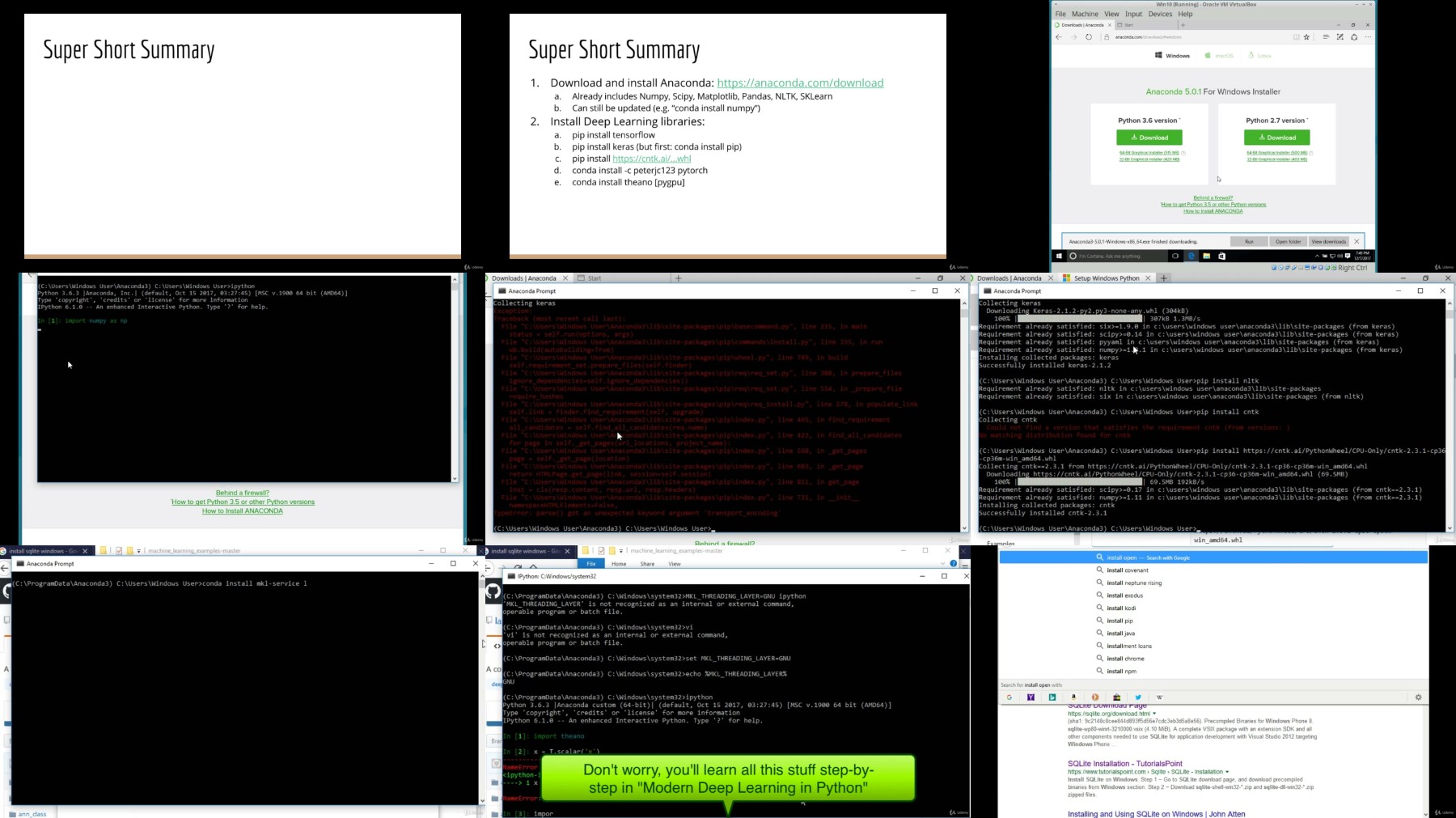
2-Anaconda-Environment-Setup.jpg

 
Zurück
Oben Unten