• Regeln für den Dokumente-Bereich:

    In den Börsenbereich gehören nur Angebote die bereits den Allgemeinen Regeln entsprechen.

    Allgemeines:

    Nicht erlaubt im Dokumente-Bereich sind:

    - indizierte Titel (inkl. Comics)
    - extremistische Werke, Zeitschriften und Comics (egal, welche Richtung)
    - jegliche Art von Pornographie
    - Anleitungen zu kriminellen Handlungen, gleich welcher Art
    - sadistische, menschenverachtende oder ähnliche Werke

    Nutzt den "Bedanken"-Button, bei Sammelthreads führen jegliche Kommentare, positiv wie negativ, sehr schnell zu einer Unübersichtlichkeit des Threads. Downmeldungen sind an den Uploader zu richten

    Vor dem Einstellen zu beachten:

    - Suchfunktion

    Vergewissert euch, dass es euer Dokument noch nicht im Board gibt, Doppelposts werden kommentarlos gelöscht. Ist es schon vorhanden, tragt es als Mirror im bestehenden Post ein.

    - Threadtitel

    Idealerweise ist sofort zu erkennen um was es sich handelt. Verseht euren Titel mit den relevanten Informationen, das hilft euch und damit auch uns und allen Suchenden erheblich weiter.

    Beispiel: [Thriller] Dan Brown - Inferno oder bei Magazinen:

    Computerbild - 14/2014 (es muss ersichtlich sein, um welche Ausgabe und welches Magazin es sich handelt)

    Folgende Präfixe stehen im Unterforum "Unterhaltung" zur Verfügung:

    [Humor]
    [Drama]
    [Erotik]
    [Fantasy]
    [Krimi]
    [Roman]
    [Thriller]
    [Horror]
    [Science Fiction]

    Inhalt des Beitrags:

    Folgende Pflichtangaben gilt es einzuhalten:

    - Autor
    - Titel
    - Präfix
    - Cover
    - Genre
    - Inhaltsbeschreibung
    - enthaltene Formate
    - Gesamtgröße des Downloads
    - Hoster
    - ggf. Passwort

    Nicht erlaubt sind alle Dateien, die den Download unnötig aufblähen um eine Affiliategrenze zu erreichen, wie zB. mp3-files, übergroße Bilder, etc.

    Ebenso nicht erlaubt sind sämtliche Dateien mit DRM, persönlichen Daten, etc., diese werden kommentarlos zu eurem eigenem Schutz gelöscht.

    Achtet bitte bei der Konvertierung der Formate auf die Lesbarkeit, ein epub, was nur einfach durch Calibre gejagt wird um ein PDF zu erhalten, ist zu 99% eben nicht lesbar. Wenn ihr es nicht könnt, dann lasst es besser oder lest euch ein, wie man es richtig macht.


    Unterforum Comics:

    Threadtitel:

    Ähnlich, wie bei Unterhaltung und Magazinen, sollte der Titel alle relevanten Informationen enthalten, hier bitte

    - den Titel des Comics
    - den Verlag (einige Comics sind in verschiedenen Verlagen erschienen)
    - das Erscheinungsjahr

    Erlaubt sind folgende Formate:

    - CBR
    - CBZ

    Grundsätzlich gilt: jede Version eines Comics erhält einen eigenen Thread, Ersteller eines Comics können ihre Bände gerne mit dem Zusatz (Original-Release) versehen.

    Bei Unsicherheiten zur korrekten Benennung bitte die Informationen von www.comicguide.de nutzen.

    Inhalt des Beitrags:

    Pflichtangaben hier sind:

    - Titel des Bandes und ggf. Nummer
    - Cover
    - falls bekannt technische Daten (DPI, Breite, Speicherqualität)
    - Größe des Downloads
    - Hoster
    - ggf. Passwort
    - falls bekannt Releasenamen
  • Bitte registriere dich zunächst um Beiträge zu verfassen und externe Links aufzurufen.


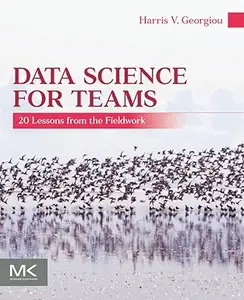
Data Science for Teams 20 Lessons From the Fieldwork

nakara

MyBoerse.bz Pro Member
d860daf0bbb406de8a80c8a5020a5aa1.webp

Data Science for Teams
by Harris V. Georgiou;

English | 2026 | ISBN: 0443364060 | 246 pages | True PDF | 6.79 MB​

Managing human resources, time allocation, and risk management in R&D projects, particularly in Artificial Intelligence/Machine Learning/Data Analysis, poses unique challenges. Key areas such as model design, experimental planning, system integration, and evaluation protocols require specialized attention. In most cases, the research tends to focus primarily on one of the two main aspects: either the technical aspect of AI/ML/DA or the teams' effort, or the typical management aspect and team members' roles in such a project. Both are equally import for successful real-world R&D, but they are rarely examined together and tightly correlated. Data Science for Teams: 20 Lessons from the Fieldwork addresses the issue of how to deal with all these aspects within the context of real-world R&D projects, which are a distinct class of their own. The book shows the everyday effort within the team, and the adhesive substance in between that makes everything work. The core material in this book is organized over four main Parts with five Lessons each. Author Harris Georgiou goes into the difficulties progressively and dives into the challenges one step at a time, using a typical timeline profile of an R&D project as a loose template. From the formation of a team to the delivery of final results, whether it is a feasibility study or an integrated system, the content of each Lesson revisits hints, ideas and events from real-world projects in these fields, ranging from medical diagnostics and big data analytics to air traffic control and industrial process optimization. The scope of DA and ML is the underlying context for all, but most importantly the main focus is the team: how its work is organized, executed, adjusted, and optimized. Data Science for Teams presents a parallel narrative journey, with an imaginary team and project assignment as an example, running an R&D project from day one to its finish line. Every Lesson is explained and demonstrated within the team narrative, including personal hints and paradigms from real-world projects. - Provides well-defined learning items in the form of Lessons, with clear structure and expected learning outcomes - Presents concepts in a narrative format that includes a running case study throughout the book, for better understanding and increased engagement - Demonstrates how to accomplish the fusion of organizational needs and constraints regarding a high-end R&D team, together with the requirements from the aspect of every day project management (deadlines, deliverables, milestones, scheduling, risks). - Shows how to transform typical project management into functional team-oriented goals and targets, in the context of iterative progress and continuous adaptation; this requires not just an Agile approach to project management, but a complete re-thinking of target setting and team evolution as a unit - Provides readers with deep understanding of how such R&D projects work in the real-world, including the everyday challenges, complexities and minimum-risk solutions; for educators in academia, this is probably the last phase of preparing future AI/ML/DA professionals for the tasks they will soon face


​
Links are Interchangeable - Single Extraction​
 
Zurück
Oben Unten