




• Regeln für den Video-Bereich:

    In den Börsenbereich gehören nur Angebote die bereits den Allgemeinen Regeln entsprechen.

    Einteilung

    - Folgende Formate gehören in die angegeben Bereiche:
    - Filme: Encodierte Filme von BluRay, DVD, R5, TV, Screener sowie Telesyncs im Format DivX, XviD und x264.
    - DVD: Filme im Format DVD5, DVD9 und HD2DVD.
    - HD: Encodierte Filme mit der Auflösung 720p oder darüber von BluRay, DVD, R5, TV, Screener sowie Telesyncs im Format x264.
    - 3D: Encodierte Filme von BluRay, die in einem 3D Format vorliegen. Dies gilt auch für Dokus, Animation usw.
    - Serien: Cartoon/Zeichentrick, Anime, Tutorials, Dokumentationen, Konzerte/Musik, Sonstiges sind demnach in die entsprechenden Bereiche einzuordnen, auch wenn sie beispielsweise im High Definition-Format oder als DVD5/DVD9/HD2DVD vorliegen. Ausnahme 3D.
    - Bereich Englisch: Englische Releases gehören immer in diesen Bereich.
    - Bereich Talk: Der Bereich, in dem über die Releases diskutiert werden kann, darf, soll und erwünscht ist.


    Angebot/Beitrag erstellen

    - Ein Beitrag darf erst dann erstellt werden, wenn der Upload bei mindestens einem OCH komplett ist. Platzhalter sind untersagt.
    - Bei einem Scenerelease hat der Threadtitel ausschließlich aus dem originalen, unveränderten Releasenamen zu bestehen. Es dürfen keine Veränderungen wie z.B. Sterne, kleine Buchstaben o.ä. vorgenommen werden. Ausnahme Serienbörse:
    - Bei einem Sammelthread für eine Staffel entfällt aus dem Releasename natürlich der Name der Folge. Beispiel: Die Simpsons S21 German DVDRip XviD - ITG
    - Dementsprechend sind also u.a. verboten: Erweiterungen wie "Tipp", "empfehlenswert", "only", "reup", usw. / jegliche andere Zusatzinformation oder Ergänzung, welche nicht in obiger Beschreibung zu finden ist.

    Aufbau des Angebots und Threadtitel

    Der Titel nach folgendem Muster erstellt zu werden. <Name> [3D] [Staffel] [German] <Jahr> <Tonspur> [DL] [Auflösung] <Quelle> <Codec> - <Group>
    Beispiel: The Dark Knight German 2008 AC3 DVDRip XviD - iND
    Beispiel: The Dark Knight 2008 DTS DL BDRip x264 - iND
    Beispiel: The Dark Knight 2008 AC3 DL BDRip XviD - iND
    Beispiel: The Dark Knight German 2008 AC3 720p BluRay x264 iND
    Beispiel: The Dark Knight 2008 DTS DL 1080p BluRay x264 iND
    Beispiel: Die Simpsons S01 German AC3 DVDRip XviD iND
    Beispiel: Die Simpsons S20 German AC3 720p BluRay x264 iND
    Beispiel: Sword Art Online II Ger Sub 2014 AAC 1080p WEBRip x264 - peppermint
    Entsprechend sind also u.a. verboten: Sonderzeichen wie Klammern, Sterne, Ausrufezeichen, Unterstriche, Anführungszeichen / Erweiterungen wie "Tipp", "empfehlenswert", "only", "reup", usw. / jegliche andere Zusatzinformation oder Ergänzung, welche nicht in obiger Beschreibung zu finden ist
    Ausnahmen hiervon können in den Bereichen geregelt sein.

    Die Beiträge sollen wie folgt aufgebaut werden:
    Überschrift entspricht dem Threadtitel
    Cover
    kurze Inhaltsbeschreibung
    Format, Größe, Dauer sind gut lesbar für Downloader außerhalb des Spoilers zu vermerken
    Nfo sind immer Anzugeben und selbige immer im Spoiler in Textform.
    Sind keine Nfo vorhanden z.B. Eigenpublikationen, sind im Spoiler folgende Dateiinformationen zusätzlich anzugeben :
    Quelle
    Video (Auflösung und Bitrate)
    Ton (Sprache, Format und Bitrate der einzelnen Spuren)
    Untertitel (sofern vorhanden)
    Hosterangabe in Textform außerhalb eines Spoiler mit allen enthaltenen Hostern.
    Bei SD kann auf diese zusätzlichen Dateiinformationen verzichtet werden.

    Alle benötigten Passwörter sind, sofern vorhanden, in Textform im Angebot anzugeben.
    Spoiler im Spoiler mit Kommentaren :"Schon Bedankt?" sind unerwünscht.


    Releases

    - Sind Retail-Release verfügbar, sind alle anderen Variationen untersagt. Ausnahmen: Alle deutschen Retail-Release sind CUT, in diesem Fall sind dubbed UNCUT-Release zulässig.
    - Im Serien-Bereich gilt speziell: Wenn ein Retail vor Abschluss einer laufenden Staffel erscheint, darf diese Staffel noch zu Ende gebracht werden.62
    - Gleiche Releases sind unbedingt zusammenzufassen. Das bedeutet, es ist zwingend erforderlich, vor dem Erstellen eines Themas per Suchfunktion zu überprüfen, ob bereits ein Beitrag mit demselben Release besteht. Ist dies der Fall, ist der bereits vorhandene Beitrag zu verwenden.
    - P2P und Scene Releases dürfen nicht verändert oder gar unter einem iND Tag eingestellt werden.


    Support, Diskussionen und Suche

    - Supportanfragen sind entweder per PN oder im Bereich Talk zu stellen.
    - Diskussionen und Bewertungen sind im Talk Bereich zu führen. Fragen an die Uploader haben ausschließlich via PN zu erfolgen, und sind in den Angeboten untersagt.
    - Anfragen zu Upload-Wünschen sind nur im Bereich Suche Video erlaubt. Antworten dürfen nur auf Angebote von MyBoerse.bz verlinkt werden.


    Verbote

    - Untersagt sind mehrere Formate in einem einzigen Angebotsthread, wie beispielsweise das gleichzeitige Anbieten von DivX/XviD, 720p und 1080p in einem Thread. Pro Format, Release und Auflösung ist ein eigener Thread zu eröffnen.
    - Grundsätzlich ebenso verboten sind Dupes. Uploader haben sich an geeigneter Stelle darüber zu informieren, ob es sich bei einem Release um ein Dupe handelt.
    - Gefakte, nur teilweise lauffähige oder unvollständige Angebote sind untersagt. Dies gilt auch für eigene Publikationen, die augenscheinlich nicht selbst von z.B. einer DVD gerippt wurden. Laufende Serien, bei denen noch nicht alle Folgen verfügbar sind, dürfen erstellt und regelmäßig geupdatet werden.
    - Untersagt sind Angebote, welche nur und ausschließlich in einer anderen Sprache als deutsch oder englisch vorliegen. Ausnahmen sind VORHER mit den Moderatoren zu klären.


    Verstoß gegen die Regeln

    - Angebote oder Beiträge, die gegen die Forenregeln verstoßen, sind über den "Melden"-Button im Beitrag zu melden.
  • Bitte registriere dich zunächst um Beiträge zu verfassen und externe Links aufzurufen.

++ Premium IPTV ++ 7000 Live Sender ++ UHD Qualität ++ Mediathek mit 18.000 Inhalten ++


VenneTV


Englische Tutorials

0d293f9a4d374cd7f551b48f5a2cea16.jpg


Complete HVAC Design Masterclass: Airside, Hydronics & Build
Published 8/2026
Created by Purankumar Gajera
MP4 | Video: h264, 3840x2160 | Audio: AAC, 44.1 KHz, 2 Ch Level: All Levels | Genre: eLearning | Language: English | Duration: 17 Lectures ( 11h 19m ) | Size: 32.3 GB

Master Commercial HVAC Design with Airside Systems, Hydronic Design, Ductwork, VAV, AHUs, Building Automation, and Practice


What you'll learn
⚡ Understand the complete architecture and working principles of commercial HVAC systems, from central plants to terminal units.
⚡ Design and analyze air distribution systems, including duct sizing, duct routing, pressure loss, and airflow balancing using industry best practices.
⚡ Learn the operation and application of chillers, cooling towers, boilers, pumps, Air Handling Units (AHUs), and Variable Air Volume (VAV) systems.
⚡ Design hydronic piping systems and understand the selection and operation of 2-way and 3-way control valves, pumps, and heating and cooling coils.

Requirements
❗ No prior HVAC design experience is required. This course is designed to take you step by step from the fundamentals to advanced commercial HVAC system design.

Description
"This course contains the use of artificial intelligence."

Welcome to theComplete Commercial HVAC Design Masterclass, a comprehensive and practical course designed to help you understand how modern commercial HVAC systems are designed, integrated, controlled, and operated.

Whether you're amechanical engineering student, HVAC engineer, MEP consultant, facility engineer, commissioning engineer, or building services professional, this course will provide a complete understanding of commercial HVAC design using real engineering concepts and practical examples.

Modern commercial buildings such as offices, hospitals, hotels, airports, shopping malls, factories, and data centers require HVAC systems that deliver thermal comfort, excellent indoor air quality, energy efficiency, and reliable operation. Designing these systems requires much more than selecting equipment-it requires understanding the interaction between mechanical equipment, air distribution, hydronic systems, automatic controls, acoustics, and building automation.

This course takes you step by step through every major component of a commercial HVAC system.

You'll begin by learning thefundamentals of heat transfer, HVAC system architecture, and central plant equipment, including chillers, cooling towers, boilers, pumps, and Air Handling Units (AHUs). You'll then exploreairside design, where you'll learn duct design principles, airflow distribution, VAV systems, diffusers, grilles, registers, terminal units, and practical duct routing techniques.

Next, you'll studyhydronic system design, including chilled water systems, hot water systems, control valves, piping layouts, expansion systems, pumps, and heating and cooling coils. You'll understand how engineers design efficient water distribution systems for commercial buildings.

The course also provides comprehensive coverage ofAutomatic Temperature Control (ATC) andBuilding Automation Systems (BAS). You'll learn how sensors, actuators, Direct Digital Controllers (DDC), Variable Frequency Drives (VFDs), control valves, dampers, and communication protocols work together to automatically maintain comfort while minimizing energy consumption.

You'll also exploreHVAC acoustics, including sound generation, vibration isolation, Noise Criteria (NC), duct silencers, and practical methods for designing quiet commercial buildings.

In addition, you'll learn how to read and interpretHVAC construction drawings, duct layouts, piping schematics, equipment schedules, symbols, and engineering documentation used in real construction projects.

Unlike many HVAC courses that focus only on theory or mathematical calculations, this course emphasizespractical engineering concepts. Every topic is explained using professionally designed diagrams, real-world building examples, engineering illustrations, and easy-to-understand explanations that bridge the gap between classroom knowledge and professional practice.

By the end of this course, you'll understand how complete commercial HVAC systems are designed, how their components interact, and how engineers create buildings that are comfortable, energy-efficient, reliable, and sustainable.

Whether you're starting your HVAC career or looking to expand your professional knowledge, this course will provide the practical skills and engineering confidence needed to understand and work with modern commercial HVAC systems.

What You'll Learn
✨ Design and understand complete commercial HVAC systems from the central plant to occupied spaces.

✨ Learn the operation of chillers, boilers, cooling towers, pumps, and Air Handling Units.

✨ Design air distribution systems, including ductwork, airflow balancing, and VAV systems.

✨ Understand hydronic piping systems, heating and cooling coils, and control valve selection.

✨ Master HVAC Automatic Temperature Control (ATC), Direct Digital Control (DDC), and Building Automation Systems (BAS).

✨ Learn HVAC acoustics, vibration isolation, and indoor environmental comfort.

✨ Read and interpret HVAC construction drawings, piping schematics, and equipment schedules.

✨ Apply practical engineering principles used in commercial buildings and real-world HVAC projects.

This course is designed to give you a strong technical foundation while focusing on the practical knowledge and design techniques used by HVAC engineers in the industry. By completing this masterclass, you'll be better prepared to design, analyze, install, commission, or manage commercial HVAC systems with confidence.

Who this course is for
⭐ It is ideal for HVAC design engineers, MEP engineers, consulting engineers, and project engineers who want to strengthen their understanding of air distribution systems, hydronic systems, HVAC controls, and building automation.


790458231_11-_hvac-10.jpg


Premium Links


Download from RapidGator


Download from DDownload



c60f395ceb2da21351243e0bacd74fb5.jpg


Wireshark for Threat Hunting & Network Forensics
Published 8/2026
Created by Selfcode Academy
MP4 | Video: h264, 1920x1080 | Audio: AAC, 44.1 KHz, 2 Ch Level: Intermediate | Genre: eLearning | Language: English | Duration: 77 Lectures ( 23h 3m ) | Size: 21.1 GB

Master Wireshark through real-world analysis, malware traffic, C2 detection, DFIR, incident response & threat hunting


What you'll learn
⚡ Analyze network traffic using Wireshark to detect malicious activity, suspicious behavior, and network anomalies.
⚡ Investigate malware traffic, command-and-control (C2), lateral movement, credential attacks, and data exfiltration using PCAPs.
⚡ Perform professional threat hunting and network forensics using Wireshark, Tshark, MITRE ATT&CK, and practical investigation workflows.
⚡ Reconstruct attack timelines, extract indicators of compromise (IOCs), and produce incident response reports through real-world case studies.

Requirements
❗ Basic understanding of computer networking (TCP/IP, IP addressing, and common protocols) is recommended. No prior Wireshark experience is required.
❗ A Windows, Linux, or macOS computer with Wireshark installed to complete the practical labs.

Description
Master Wireshark Through Real-World Threat Hunting & Network Forensics

Network traffic tells the complete story of a cyber attack-but only if you know how to analyze it.

This comprehensive, hands-on course teaches you how to useWireshark to investigate real-world cyber incidents, analyze malicious network traffic, detect attacker activity, and perform professional network forensics. Rather than focusing only on Wireshark features, you'll learn how security analysts investigate attacks using packet captures (PCAPs) and structured threat hunting methodologies.

Throughout the course, you'll build practical skills by working with realistic investigations covering malware traffic analysis, command-and-control (C2) detection, DNS tunneling, credential attacks, lateral movement, data exfiltration, protocol anomalies, and network troubleshooting. You'll also learn to reconstruct attack timelines, extract Indicators of Compromise (IOCs), correlate network evidence, and document findings as part of an incident response workflow.

The course combines Wireshark with practical tools and techniques used by cybersecurity professionals, including Tshark, MITRE ATT&CK, CyberChef, and open-source PCAP datasets. Every major topic includes hands-on demonstrations and practical exercises designed to reinforce real investigation skills.

By the end of this course, you'll be able to confidently analyze packet captures, identify suspicious network behavior, investigate security incidents, and perform network-based threat hunting using professional workflows.

Whether you're preparing for a SOC analyst role, strengthening your DFIR skills, advancing your blue team expertise, or simply wanting to master Wireshark beyond basic packet analysis, this course provides a structured, practical learning experience focused on real-world investigations.

Who this course is for
⭐ This course is designed for SOC analysts, threat hunters, incident responders, DFIR professionals, cybersecurity students, network security engineers, penetration testers, and IT professionals who want to develop practical Wireshark skills for threat hunting, malware traffic analysis, network forensics, and real-world packet investigations. It is also suitable for learners with a basic understanding of networking who want to advance their packet analysis and incident investigation skills.


790598117_77-_14-1_capstone_investigation_-_complete_threat_hunting__network_forensics.jpg


Premium Links


Download from RapidGator


Download from DDownload



hqdefault.jpg


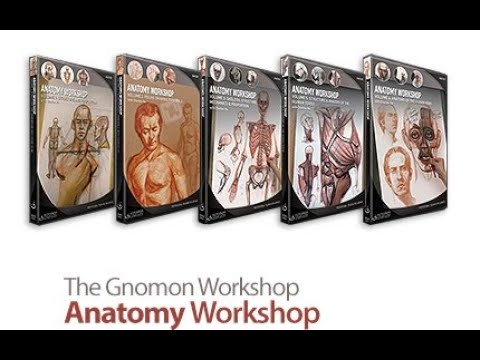
The Gnomon Workshop - Anatomy Workshop vol.1-5 with Charles Hu
MP4/MOV | Video: h264, 1280x720 | Audio: MP4A, 44.1 KHz
Language: English | Size: 27 GB | Duration: 14h 17m


VOL.1
In this first lecture of a series focusing on human anatomy as it relates to figurative art, figure painter and instructor Charles Hu discusses key skeletal and muscular landmarks along with methods for maintaining the correct proportional relationships between the various structures of the human body. Throughout the lecture, Charles refers to skeletal reference to illustrate how skeletal elements not only connect, but more importantly, how these structures move in relation to one another, providing a clear roadmap for maintaining correct proportional relationships in your figure drawings. Charles begins with an initial "mechanical" representation of the human form from the front view. He first discusses the basic proportions and structures of the human head. As the human head is often used as the base unit of measurement in figure drawing, the important landmarks and relationships between the brow region, eye sockets, cheek bones, nose, mouth and chin will be explored in great detail. After blocking in the head, the neck and shoulder area is discussed before moving down to the chest, stomach and pelvis regions. Again, key structural landmarks are discussed in order to understand the anatomical, structural, and proportional importance of each. Charles then moves on to discuss arms and legs, along with correct proportional guides for laying in key elements like elbows, wrists, knees and ankles. Once completed with the anatomical sketch from the front view, he moves onto the drawings from both the back and side views, providing a clear and comprehensive study of the base human form. Suitable for all artists developing their understanding of the figure and its complex anatomical relationships, this lecture and demonstration is an immersive and critical foundation.
VOL.2
In this lecture, the second title in a series on human anatomy as it relates to figurative art, figure painter and instructor Charles Hu expands on the structure and proportion principals discussed in his first lecture, translating them into a live figure drawing studio environment. Charles begins this lecture by discussing the principals of shading and light to describe three dimensional forms, as he will be demonstrating shading techniques later in the lecture. Here, Charles discusses topics like the difference between core shadow and cast shadow, direct light versus bounced light, and how to find the 'true' color or value of a form under complex lighting conditions. He then moves on to drawing the figure from a live model in a studio environment. He begins by laying in the figure, employing the principals covered in his first lecture, identifying the key structural landmarks on the live model, then demonstrating some new techniques to help maintain correct proportions under real world drawing conditions. He proceeds to do 'lay-ins' for the figure in a standing position from the front, a seated figure, and lastly the standing figure from the back to illustrate how to draw the same figure from various angles and different poses. The final phase is to shade and refine one of the drawings to take it to a more finished state. Charles begins by blocking in the cast shadows and then the core shadows on the figure, then refines the shading to include bounced light and highlights by pulling those areas back out with an eraser. The finishing stage involves adding more detail back into the shadows, and pulling out some final areas of bounce light. Suitable for all artists interested in developing their understanding of the figure, Charles Hu masterfully explores this complex subject while providing a clear and methodical workflow.
VOL.3
In this human anatomy tutorial series titled Skeletal Structure, Mechanics and Proportion, instructor Charles Hu will break down the human skeletal system in terms of how it relates to drawing a dynamic figure. Starting with basic proportion and structure, Charles breaks down the human skeleton into 9 primary structures: the head, shoulder, rib cage, spine, pelvis, arms, legs, hands and feet. He breaks down the primary landmarks and planes of each structure and identifies features on specific bones important to the mechanics and motion. Charles also discusses the skeletal mechanics of each structure to provide the mechanical understanding of the system in order to achieve more realistic and dynamic figure drawings.
VOL.4
In this human anatomy tutorial titled Anatomy of the Human Head, figure artist Charles Hu provides an anatomical breakdown of the human head. Beginning with general proportions, planes and structural landmarks, Charles then demonstrates how to apply these principles with a series of life drawing exercises. In these three exercises - from Front, Side and ¾ View, he shows how to approach the lay-ins using the general proportions discussed previously. He then breaks the head down into their individual structures, defining the primary planes of the head first, then refining the individual structures, using the planes to help define the core and cast shadows and shading of the head. Lastly, Charles discusses the primary muscle groups of the human head, demonstrating each muscle's primary motion. These combined lectures provide a much deeper understanding of the human head and provides a strong foundation for drawing much more dynamic portraits.
VOL.5
This series of tutorials is focused on and titled Structure and Anatomy of the Human Torso. In a continuation of his previous lectures on human anatomy, figure artist Charles Hu approaches these lectures in the same fashion, beginning with a discussion on the primary skeletal structures making up the torso - the neck, spine, rib cage, pelvis and shoulder. After discussing the primary structures and proportions, he begins by breaking down the primary muscle groups, starting with the neck then working his way down to the shoulder, chest, and abdomen, before moving to the muscle groups of the back. In discussing the muscle groups, Charles discusses not only their positions and overlaps, but also their mechanical contributions to the motion of the underlying skeletal structure. This structural and mechanical understanding is essential in producing believable and dynamic figure drawings.

794181235_huc01_ch04_s.jpg


831fa3ad14edd7de3c43d341c9c5a798.jpg


Complete Control Systems Engineering Masterclass
Published 8/2026
Created by Purankumar Gajera
MP4 | Video: h264, 3840x2160 | Audio: AAC, 44.1 KHz, 2 Ch Level: All Levels | Genre: eLearning | Language: English | Duration: 23 Lectures ( 13h 4m ) | Size: 31.1 GB

Master Feedback, Stability, Root Locus, Bode Plots, PID Controllers, State-Space Analysis, and Practical Control System


What you'll learn
⚡ Understand the fundamental concepts of control systems, including open-loop and closed-loop systems, feedback, and system modeling.
⚡ Analyze dynamic systems using transfer functions, block diagrams, and signal flow graphs.
⚡ Evaluate the time-domain performance of control systems, including rise time, settling time, overshoot, and steady-state error.
⚡ Determine the stability of control systems using Routh-Hurwitz Criterion, Root Locus, Bode Plots, Nyquist Plots, and Nichols Charts.

Requirements
❗ No prior knowledge of Control Systems Engineering is required. This course is designed to take you from the fundamentals to advanced concepts in a step-by-step manner.

Description
"This course contains the use of artificial intelligence."

Welcome to theControl Systems Engineering Masterclass, a comprehensive course designed to help you build a strong understanding of one of the most important subjects in electrical, electronics, mechanical, mechatronics, instrumentation, and automation engineering.

Control systems are the foundation of modern engineering applications, including industrial automation, robotics, electric vehicles, renewable energy systems, aerospace, manufacturing, process industries, and smart technologies. Whether you're an engineering student preparing for examinations or a working professional looking to strengthen your technical skills, this course provides a practical, step-by-step approach to mastering Control Systems Engineering.

Unlike many courses that focus only on mathematical derivations, this course emphasizesconceptual understanding, practical engineering applications, and systematic problem-solving. Every topic is explained in simple language using real-world examples, solved numerical problems, examination-oriented questions, and practical engineering scenarios.

We begin with the fundamentals of control systems and gradually progress to advanced analysis and design techniques. Along the way, you'll develop the knowledge and confidence needed to analyze, design, and improve real engineering control systems.

Throughout this course, you will learn

✨ Fundamentals of Open-Loop and Closed-Loop Control Systems

✨ Mathematical Modeling of Mechanical, Electrical, and Electromechanical Systems

✨ Transfer Functions and Block Diagram Reduction Techniques

✨ Signal Flow Graphs and Mason's Gain Formula

✨ Time Response Analysis of First and Second Order Systems

✨ Steady-State Error Analysis and Error Constants

✨ Stability Analysis using the Routh-Hurwitz Criterion

✨ Root Locus Analysis and Controller Design

✨ Frequency Response Analysis using Bode Plots, Nyquist Plots, and Nichols Charts

✨ Gain Margin, Phase Margin, Bandwidth, and Resonance

✨ Lead, Lag, and Lead-Lag Compensator Design

✨ PID Controller Fundamentals, Tuning, and Industrial Applications

✨ State-Space Representation, Controllability, and Observability

✨ State Feedback and Observer Design

✨ Solved Numerical Problems and Multiple-Choice Questions

✨ Practical Applications in Robotics, Motor Drives, Renewable Energy, Industrial Automation, Aerospace, and Process Control

This course has been carefully structured so that each lesson builds upon the previous one. Even if you are completely new to control systems, you can confidently follow the course from beginning to end.

The course also includes numerous solved examples, conceptual explanations, engineering discussions, and examination-oriented problems to strengthen your understanding and improve your problem-solving skills.

Whether your goal is to

✨ Prepare for university examinations

✨ Prepare for GATE, ESE (IES), PSU, and other competitive engineering examinations

✨ Improve your technical interview skills

✨ Strengthen your engineering fundamentals

✨ Apply control systems in industrial projects

✨ Advance your engineering career

this course provides the knowledge and practical understanding you need.

By the end of this course, you will be able to confidently analyze dynamic systems, evaluate stability, design controllers, interpret system responses, and apply control system principles to real-world engineering problems.

If you're ready to master one of the most important subjects in engineering through clear explanations, practical examples, and industry-relevant applications, then this course is for you.

Enroll today and start your journey toward becoming confident in Control Systems Engineering!

Who this course is for
⭐ This course is designed for electrical, electronics, instrumentation, mechatronics, mechanical, and automation engineering students who want to build a strong foundation in Control Systems Engineering.


798440552_7-_c-6.jpg


Premium Links


Download from RapidGator


Download from DDownload


12b5d339157603fe1873ed4a024f4e95.jpg


Modern JavaScript Projects Course 60 plus Apps Games DOM
Last updated 2/2026
MP4 | Video: h264, 1920x1080 | Audio: AAC, 44.1 KHz
Language: English | Size: 32.84 GB | Duration: 60h 45m

Real Projects! AJAX Java Script Projects Apps 60+ Projects Modern JS DOM JavaScript Games Portfolio Games DOM


What you'll learn
Perfect to get started with JavaScript - loaded with starter projects to get you coding
Master the DOM (document object model)
Modular learning sections with over 50 real world projects with pure JavaScript sing DOMÂ interaction.
Explore how you can learn JavaScript while building FUN real world JavaScript projects from Scratch
How to use JavaScript and how JavaScript works behind the scenes
Explore JavaScript Document Object Model Make interactive and Dynamic Web Pages
Manipulate elements using JavaScript - Bring your web pages to LIFE with JavaScript
How to create elements dynamically and more - With Games and Amazing Projects to Build
Develop Basic JavaScript Skills variables, boolean logic, if/else, loops, functions, arrays, etc.
Go from a total beginner to an advanced JavaScript developer
JavaScript and programming fundamentals: variables, boolean logic, if/else, loops, functions, arrays, etc.
Wow create real-world apps with both ES5 and ES6+
Modern JavaScript for 2020
Source Code include - Build YOUR own version of the app TODAY
Go from a total beginner to an advanced JavaScript developer

Requirements
HTML and CSS knowledge
Use of editor to write code
Access to computer
Fundamental JavaScript concepts

Description
Modern JavaScript Masterclass DOM AJAX Real Projects and Portfolio Builder

Learn modern JavaScript by building real world projects apps and games using pure JavaScript and the Document Object Model.

This is one of the most complete JavaScript courses available online. Designed for beginners and developers who want hands on experience, this course focuses on practical coding skills through real projects rather than theory alone.

With more than 60 real projects, this course teaches you how to create interactive dynamic web applications using modern JavaScript including ES6 features AJAX and DOM manipulation.

You will build games tools apps and portfolio ready projects while learning how JavaScript works behind the scenes.

Why this course is unique

Massive project based learning approach
Over 60 real JavaScript projects apps and games
Modern JavaScript ES6 and beyond
AJAX and API based projects
Pure vanilla JavaScript no libraries no shortcuts
Step by step coding walkthroughs
Portfolio focused training for job readiness
Real world problem solving exercises

This course is designed to get you coding immediately and help you develop practical skills that employers look for.

What you will learn

JavaScript fundamentals from beginner to advanced
DOM manipulation including selecting updating and creating elements
Event handling and user interaction techniques
Working with forms input validation and dynamic content
Using AJAX Fetch API and working with external data
Building animations using requestAnimationFrame
Creating interactive web apps and games
Working with browser storage cookies and local storage
Debugging JavaScript code and writing clean structured programs

Build your JavaScript portfolio

By the end of the course you will have created more than 60 fully working JavaScript projects that you can showcase in your portfolio.

Projects include

Interactive JavaScript games
Dynamic web applications
AJAX data driven apps
Form validation tools
Image sliders and carousels
Popup modals and UI components
Typing tests and calculators
Data export and CSV tools
Shopping list applications
Clipboard interaction tools
Email extraction tools using RegEx
Animation based projects
DOM interaction mini apps

And many more real world coding projects.

Modern JavaScript and AJAX Projects

You will learn how to use modern JavaScript features such as

Arrow functions
Promises
Async and Await
Fetch API
Object destructuring
Template literals
Event delegation
Dynamic DOM updates

These skills are essential for modern web developers.

Portfolio and job ready skills

This course helps you build a strong project portfolio that demonstrates your ability to apply JavaScript in real situations.

Employers want to see real coding examples. This course provides dozens of projects that show your skills clearly.

Each project includes source code and step by step explanations so you can learn how everything works.

Bonus learning resources

Hundreds of downloadable code examples
Multiple ebook guides with structured lessons
Coding challenges and exercises
Project starter templates

Who this course is for

Beginners who want to learn JavaScript by doing
Students who prefer project based learning
Developers wanting to strengthen DOM and AJAX skills
Anyone looking to build a strong JavaScript portfolio
Web designers wanting to add interactive functionality

Learning approach

Learn by building real projects
Try the code before seeing solutions
Practice with guided challenges
Customize and extend projects
Apply skills to real world scenarios

This is not a theory only course. This is a complete hands on JavaScript coding experience focused on building real applications.

If you want to master JavaScript DOM AJAX and modern coding techniques while creating a powerful portfolio this course is for you.

Start building modern JavaScript projects today.

Who this course is for
Anyone who wants to practice writing JavaScript
JavaScript Beginners
Web developers
HTML and CSS coders
Take this course if you want to gain a deep understanding of the most popular programming language in the world: JavaScript.
Take this course if you want to get started with programming in general: JavaScript is a great language to learn how to code.


798445317_720_-_simple_random_number_guessing_game.jpg


Premium Links


Download from RapidGator


Download from DDownload


af389b394486216398ef72a1b67f7d0c.jpg


3D modeling Designs and Basics with TinkerCad
Published 4/2023
Created by IoT ****
MP4 | Video: h264, 1280x720 | Audio: AAC, 44.1 KHz, 2 Ch
Genre: eLearning | Language: English | Duration: 8 Lectures ( 1h 2m ) | Size: 1 GB


3d designs in TinkerCad Basics for ****

​


What you'll learn
-Getting familiar with the basics of 3D modeling
-Learning how to use the Tinkercad website to build 3D models
-Learning how to choose the appropriate dimensions and measurements for each 3D model
-Learning how to turn cartoon characters and famous landmarks into 3D models
-Problem solving and creative and logical thinking skills

Requirements
You don't need previous experience, you will learn everything from scratch

Description
This course teaches **** how to design 3D models which is a skill that they can use in the future in game design and animation movies. This course also helps **** connect to the advancing technological world and how to think outside the box.The 3D Modeling course is an excellent opportunity for **** to learn the basics of design and creation in a fun and engaging way. This course is specifically designed for children who are interested in exploring the world of design and creation. Through this course, **** will learn the fundamentals of 3D modeling, which is the process of creating three-dimensional digital representations of objects and spaces.The course will cover a wide range of topics, including basic modeling techniques, creating 3D shapes, using different tools, and applying textures and colors. **** will also learn about the importance of lighting, camera angles, and perspective in creating a visually appealing 3D model.The course is taught by experienced instructors who are experts in 3D modeling and are passionate about teaching ****. They use a variety of teaching methods, including hands-on activities and interactive projects, to make learning fun and engaging.At the end of the course, **** will have the skills and knowledge they need to create their own 3D models, including toys, buildings, and characters. This course is perfect for **** who are interested in design, gaming, and technology, and is a great way to encourage creativity and imagination.

Who this course is for
Beginners in 3D designs.


798440357_2-_modeling_a_fish.jpg


Premium Links


Download from RapidGator


Download from DDownload
 
bd48a8173e673560e66d91e50e3429f8.jpg


Catia V5 Basic To Advance Interior Exterior Surfacing
MP4 | Video: h264, 1920x1080 | Audio: AAC, 44.1 KHz
Language: English | Size: 31.47 GB | Duration: 33h 45m

Here we will work on parts from Hyundai, JLR, Tata mot, volvo,


What you'll learn
Take this course if you are looking for job change in automotive design or want to learn domain
Here you will learn CATIA and one automotive domain which is important to get a job
Here you will start from sketchinHere your will learn all real thing that we do in any company ( not like a CAD centre )g and end with interior projects
After completing this course you will be confident for any two or three year experience job in design
Here you will learn interview process , discussions of your interview and resume writing for this course
Here we will also discuss some projects that you can reflect in resume

Requirements
Fresher and Experienced

Description
My name is Singh and professionally am automotive seating design engineer and I have 10+ year of experience of working with many such as Hyundai, Honda , Audi and In this course we are going will learn the Automotive interior design with engineering. CAD and engineering, and if we are doing both that is called design, there is no use of CAD if you are design something without using engineeringSo this course is totally industry oriented and we will follow every rule of design, and we will work on Here am going to teach you from job prospectus, if you are looking for job in automotive then this course is for you Whether you are a fresher or working in small scale industriesIn the course course I have also discussed the interview process and the discussion happened during interviews that ill really Help you to find a job ,If someone have job constrain contact me I will help youYou some of having questions How to become a automotive design engineerFor that I have free course on , that will clear your all doubt about designSo in this course we will learn automotive interior and seating doming from very basic level to advance levelAnd then we will do some project that you can reflect on your resume for interviewAnd I added some recorded doubts session of my personal classes, that will clear your many doubt if you want you can skip that but I wont suggestEvery Sunday am taking free classes for student and you can join my free classes to clear your doubts

Fresher and Experienced


798440902_97_-_personal_classes_demo_session.jpg


Premium Links


Download from RapidGator


Download from DDownload


Zurück
Oben Unten